

Benefits of Shea Butter Soap: A Science-Backed Guide

Table of Contents
- Why Shea Butter Soap Stands Apart from Ordinary Bars
- The Top Skin Benefits of Shea Butter Soap, Explained
- Is Shea Butter Soap Good for Sensitive Skin?
- Shea Butter vs Olive Oil Soap: Which Is Better for You?
- What to Look for in a Quality Shea Butter Soap Bar
- How to Get the Most from Your Shea Butter Soap
- The Bottom Line on Shea Butter Soap Benefits
- Frequently Asked Questions
Last Updated: September 7, 2026
Why Shea Butter Soap Stands Apart from Ordinary Bars
Most commercial bar soaps strip the skin of its natural oils, leaving it tight, flaky, and prone to irritation (peer-reviewed research). The benefits of shea butter soap start with a fundamentally different approach: instead of harsh detergents that disrupt the lipid barrier, a quality bar cleanses while depositing fatty acids and vitamins back into the skin.

The difference comes down to chemistry. Traditional bars often rely on sodium lauryl sulfate, a detergent that creates heavy foam but damages the skin barrier over time (peer-reviewed research). Shea butter soap, by contrast, is made through saponification, the natural reaction between fats and an alkali. When crafted with a "superfat" percentage, the finished bar retains unsaponified shea butter, meaning every wash delivers emollient richness rather than removing it.
Below, we will examine the science behind these skin benefits, compare shea butter against olive oil soap, and outline exactly what to look for when choosing a quality bar.
The Top Skin Benefits of Shea Butter Soap, Explained
Deep Moisture and a Stronger Skin Barrier
Shea butter soap is prized primarily for its ability to moisturize without leaving a greasy residue. Raw shea butter contains high concentrations of triglycerides and fatty acids, including oleic, stearic, and linoleic acids, which mimic the skin's own natural sebum. This composition reduces trans-epidermal water loss, helping to maintain skin elasticity and suppleness.

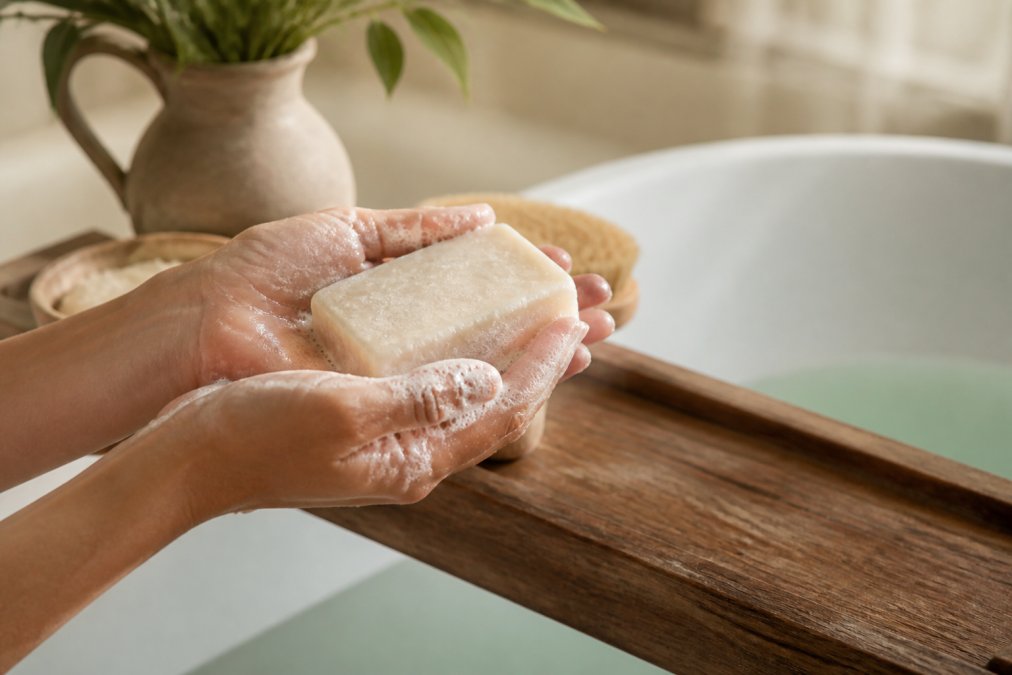
The key distinction is that shea butter functions as both an emollient and an occlusive agent. Emollients fill the gaps between skin cells, smoothing the surface, while occlusive ingredients form a protective layer that locks in moisture. A well-made shea butter soap bar delivers both actions in a single wash, making it particularly effective for dry or winter-affected skin.
The real question is whether these fatty acids survive the soap-making process. In cold-process soapmaking, the alkali reacts with oils to form soap. If the recipe uses a 5% superfat, meaning 5% of the oils remain unsaponified, those remaining fatty acids stay intact and deposit onto the skin during washing. A bar with zero superfat leaves no shea butter behind, regardless of how much was added to the pot. This is why the term "shea butter soap" alone tells you little; the superfat percentage is the actual predictor of moisturizing benefit.
Soothing Relief for Eczema, Psoriasis, and Dermatitis
For those managing chronic skin conditions, the soothing properties of shea butter soap can provide meaningful relief. Shea butter contains cinnamic acid esters and other anti-inflammatory compounds that help calm redness and irritation associated with eczema, psoriasis, and dermatitis (PubMed). Unlike some alternatives, shea butter offers a gentle, natural humectant approach that supports the skin's healing process.
A common mistake is assuming that all "natural" soaps are safe for compromised skin. Many handmade bars still contain essential oils or fragrances that trigger flare-ups. Truly hypoallergenic shea butter soap uses minimal ingredients, allowing the butter's soothing properties to work without interference. For individuals with reactive skin, choosing an unscented or lightly botanical bar is often the difference between relief and further irritation.
The anti-inflammatory benefit is dose-dependent and formulation-dependent. The cinnamic acid esters in shea butter are present in the raw butter, but high-heat processing, common in melt-and-pour bases or commercial refining, can degrade these compounds. Cold-processed bars that use unrefined shea butter retain a higher concentration of these active constituents.
Antioxidant Protection and Support for Aging Skin
Shea butter is naturally rich in vitamins A and E, both of which act as antioxidants that neutralize free radicals responsible for premature aging. Free radicals, generated by UV exposure and environmental pollutants, break down collagen and elastin, leading to fine lines and reduced skin elasticity. Regular use of shea butter soap helps combat this oxidative stress, supporting the skin's natural rejuvenation processes.
While a soap bar is rinsed off quickly, the residual shea butter left on the skin continues to deliver benefits throughout the day. This sustained contact supports wrinkle prevention and maintains skin elasticity over time.
The synergy between shea butter and the soap base itself matters. The saponification process converts some of the shea butter's triglycerides into soap molecules, which are surfactants that lift dirt and excess sebum, while the unsaponified fraction remains as a skin-conditioning agent. This dual action, cleansing and depositing, is what separates a well-formulated shea butter soap from a plain moisturizer. A moisturizer sits on the skin's surface; a quality shea soap removes debris and then leaves behind a protective lipid film. For aging skin, each wash is a two-step process: gentle exfoliation followed by antioxidant delivery.
Is Shea Butter Soap Good for Sensitive Skin?
Yes, shea butter soap is generally excellent for sensitive skin, provided it is formulated without harsh additives. The key factor is that shea butter is naturally non-comedogenic, meaning it will not clog pores, and it has a low irritation potential compared to many botanical alternatives. Its anti-inflammatory profile makes it suitable for skin that reacts poorly to synthetic detergents and artificial fragrances.
However, not every bar labeled "shea butter soap" is created equal. Many commercial products contain only trace amounts of shea butter, relying instead on synthetic surfactants and fillers. To genuinely benefit sensitive skin, look for a bar where shea butter appears prominently in the ingredient list and where the soap is free from sulfates, parabens, and synthetic dyes.
Shea Butter vs Olive Oil Soap: Which Is Better for You?
Choosing between shea butter soap and olive oil soap depends largely on your skin type and the experience you want. Olive oil soap, such as Castile, is renowned for its gentle cleansing efficacy and is particularly well suited to very delicate or baby skin. It produces a mild, creamy lather and is rich in squalene, a compound that closely resembles the skin's own lipids.
Shea butter soap, on the other hand, offers a richer, more deeply conditioning wash. It provides superior moisture retention, making it the better choice for dry, mature, or weather-exposed skin. The trade-off is that shea butter bars can feel slightly heavier than olive oil soap, though a well-balanced formulation avoids any greasy after-feel.
| Comparison | Shea Butter Soap | Olive Oil Soap |
|---|---|---|
| Best for | Dry, mature, or eczema-prone skin | Sensitive or baby skin |
| Primary benefit | Deep moisture retention | Gentle, mild cleansing |
| Lather | Rich and creamy | Light and silky |
| Skin feel | Conditioned, soft | Clean, non-greasy |
| Key fatty acids | Oleic, stearic, linoleic | Oleic acid (squalene) |
For most adults with normal to dry skin, shea butter soap offers the more comprehensive daily benefit. If your skin is exceptionally reactive or you prefer a lighter wash, olive oil soap is a worthy alternative. Many households keep both on hand, using shea butter bars in winter and olive oil soap during humid months.
Two other butters deserve consideration: cocoa butter and coconut oil. Cocoa butter soap produces a harder bar with a luxurious, dense lather. Its fatty acid profile is dominated by stearic and palmitic acids, which give it excellent cleansing properties but less skin-softening ability than shea butter. Cocoa butter also has a lower comedogenic rating than shea butter, making it a better choice for acne-prone individuals who still want a moisturizing bar. However, cocoa butter soap can feel more drying on mature skin because it lacks the oleic acid content that shea butter provides.
Coconut oil soap, by contrast, is the outlier. It produces a hard, white bar with a bubbly lather, but it is notorious for being drying unless used at low percentages in a recipe. Most soapmakers cap coconut oil at 20% to 30% of the oil blend because higher amounts strip the skin. When coconut oil is the primary fat, the result is a bar that cleanses aggressively, fine for oily skin in humid climates but counterproductive for anyone with dry or compromised skin. Shea butter soap outperforms coconut oil soap for moisture retention because shea's oleic acid content (40% to 60%) is far higher than coconut's lauric acid dominance, which is cleansing rather than conditioning.
The best bar for you depends on your skin's lipid profile, not just your skin type. Dry skin lacks ceramides and free fatty acids; shea butter's stearic and oleic acids directly replenish those. Oily skin produces excess sebum but often lacks linoleic acid, which is why shea butter's linoleic content (3% to 8%) can help normalize oil production rather than exacerbate it. Acne-prone skin, however, may respond better to a cocoa butter blend because its lower oleic content reduces the risk of pore congestion.
For a balanced routine, consider rotating bars seasonally. A shea butter bar with a 5% superfat works well in winter; in summer, switch to a blend that includes olive oil or cocoa butter to lighten the feel.
What to Look for in a Quality Shea Butter Soap Bar
A quality shea butter soap bar begins with the ingredient list. Look for raw or unrefined shea butter listed among the first ingredients, not as an afterthought. The presence of whole botanical oils, such as olive or coconut oil, indicates a thoughtfully formulated base.
The production method matters as much as the ingredients. Cold-processed soap retains the full nutritional profile of shea butter, whereas heat-treated or melt-and-pour bases often degrade the delicate vitamins. Small-batch production allows for careful control of the superfatting process, ensuring each bar retains an optimal amount of unsaponified shea butter.
How to Get the Most from Your Shea Butter Soap
To extend the life of your bar and maximize its benefits, proper storage is essential. Shea butter soap should be kept on a draining soap dish that allows water to run off between uses. A bar left sitting in a puddle will dissolve quickly, wasting the product and reducing its cleansing efficacy.
For best results, apply the lather directly to damp skin and massage in circular motions before rinsing. The goal is to leave a thin film of shea butter on the skin rather than scrubbing it all away. After rinsing, pat the skin dry rather than rubbing, allowing the residual emollients to absorb fully.
The Bottom Line on Shea Butter Soap Benefits
The benefits of shea butter soap extend far beyond simple cleansing. From reinforcing the skin barrier and providing relief for eczema and dermatitis to delivering antioxidant protection that supports aging skin, a quality shea butter bar is a versatile addition to any natural skincare routine.
The challenge is finding a bar that delivers these benefits as promised. Mass-produced soaps often dilute shea butter to negligible levels, while handmade bars vary widely in quality. Gracie & Co. 1942 offers premium handcrafted bath and body products rooted in over 60 years of family tradition. By utilizing 100% natural ingredients like olive oil, shea butter, and botanicals, we provide eco-friendly and cruelty-free solutions designed to promote healthier, more radiant skin. Our small-batch production ensures that every item is crafted with intention, purpose, and the highest quality care for our customers.
If you are ready to experience the difference that a truly natural shea butter soap can make, explore our collection of handcrafted bars, including the best-selling Champagne Kisses Shea Butter Soap and the invigorating Eucalyptus Peppermint Shea Butter Soap.

Frequently Asked Questions
Is shea butter soap good for the face?
Yes, shea butter soap is generally safe and beneficial for facial skin. Its non-comedogenic nature means it won't clog pores, while its high fatty acid content provides gentle cleansing without stripping natural oils. This makes it a suitable option for those with dry or sensitive facial skin. However, if you are prone to acne, patch-testing a new bar first is wise, as the moisturizing properties might feel heavy for very oily skin types.
What are the disadvantages of shea butter for skin?
The main disadvantage is the potential for allergic reactions, though rare. People with a latex allergy or a sensitivity to nuts should be cautious, as shea is derived from the nut of the shea tree. Using a low-quality bar with synthetic additives can also negate benefits. For some, the rich, buttery feel might be too heavy, especially in humid climates. Always choose a pure, natural bar to minimize these risks.
How does shea butter compare to other natural soap oils?
Compared to olive oil soap, which is known for its gentle cleansing, shea butter soap offers a higher concentration of unsaponifiable fats. This means it retains more of its natural vitamins and nourishing properties through the soap-making process, providing skin barrier support and anti-inflammatory benefits. While olive oil creates a mild, conditioning lather, shea butter excels at intense moisture retention and soothing conditions like eczema.
Switching from conventional bar soap to a quality shea butter soap is a small change with noticeable results for skin hydration, comfort, and long-term health. With over 60 years of soap-making heritage and a commitment to 100% natural, cruelty-free ingredients, Gracie & Co. 1942 offers bars that genuinely deliver on the promise of healthier, more radiant skin. Get started with Gracie & Co. 1942 and feel the difference in your daily routine.