

Buy Artisan Olive Oil Soap: A 2026 Guide

Table of Contents
- Why Buy Artisan Olive Oil Soap in 2026
- Benefits of Castile Soap for Your Skin
- Olive Oil Soap for Sensitive Skin
- What to Look For When You Buy Artisan Olive Oil Soap
- How to Store Handmade Soap So It Lasts
- Sustainability and Fair Trade in Artisan Soap
- Frequently Asked Questions
Last Updated: September 14, 2026
Why Buy Artisan Olive Oil Soap in 2026
Walk down any drugstore aisle and you'll see dozens of "moisturizing" bars wrapped in plastic. Most of them are detergent bars with a dash of olive oil added for the label. When you buy artisan olive oil soap, you get something different: a bar made from saponified extra virgin olive oil, cured slowly, and built to clean skin without stripping it. This guide from Gracie & Co. 1942 walks through how these bars are made, who they suit best, and what separates a genuine artisan bar from a mass-market imitation.
Artisan olive oil soap is a handcrafted bar made by combining olive oil with an alkali through saponification, producing glycerin-rich soap that cleans gently while supporting the skin barrier. The FDA's guidance on cosmetic versus drug claims draws a clear line between products that simply cleanse and those that promise to treat a condition, and true olive oil soap sits firmly in the first category: it cleans well and leaves skin comfortable.
That distinction matters more than most shoppers realize. A bar that leaves your skin tight and itchy isn't doing its job, no matter what the wrapper says.
How Artisan Olive Oil Soap Is Made
Saponification is the chemical reaction that turns oil and lye into soap and glycerin. In small-batch production, makers blend extra virgin olive oil with a measured alkali solution, stir until the mixture thickens, pour it into molds, and let it cure for weeks.
Cold-pressed and cold-process methods dominate artisan production because they preserve the natural glycerin that forms during saponification. Commercial manufacturers often extract that glycerin and sell it separately, then add synthetic hardeners and detergents to the remaining bar. Artisan makers leave it in place.
Curing takes four to six weeks for most olive oil bars. That wait is why handmade soap costs more than a drugstore bar: someone has to store, rotate, and monitor every batch.
Benefits of Castile Soap for Your Skin
Castile soap, traditionally made with olive oil as its base, is prized for being gentle, moisturizing, and low-irritation. The fatty acids in olive oil create a mild lather rather than a harsh foam, and the retained glycerin acts as an emollient that draws moisture toward the skin.
A few practical advantages stand out:
- Moisturizing lather that rinses clean without a filmy residue
- Natural glycerin left intact during cold-process production
- Antioxidants and vitamin E naturally present in olive oil
- No sulfates, parabens, or synthetic fillers in a well-made bar
- Biodegradable formula that breaks down after it washes down the drain
Olive oil also contains squalene and oleic acid, both of which help skin feel soft rather than squeaky. That squeaky feeling, by the way, is usually a sign your skin's natural oils have been stripped.
Olive Oil Soap vs. Commercial Detergent Bars
The biggest difference between artisan olive oil soap and a commercial detergent bar comes down to ingredients and how they treat your skin barrier. Detergent bars rely on synthetic surfactants like sodium lauryl sulfate, which clean aggressively and often leave skin dry.
| Feature | Artisan Olive Oil Soap | Commercial Detergent Bar |
|---|---|---|
| Base ingredient | Saponified olive oil | Synthetic surfactants |
| Glycerin | Retained naturally | Often removed |
| Fragrance | Essential oils or none | Synthetic fragrance |
| Skin feel after use | Soft, comfortable | Tight, sometimes itchy |
| Curing time | 4-6 weeks | Hours to days |
If you've used conventional bars for years and felt fine, that's genuinely common. But dry winter skin, flare-ups after shaving, and that tight feeling after a hot shower often trace back to what's in the bar, not the water.
Olive Oil Soap for Sensitive Skin
Olive oil soap for sensitive skin works because it contains fewer irritants than most commercial alternatives. A fragrance-free, dye-free bar removes the two most common triggers for reactive skin, leaving a short ingredient list that's easier to tolerate.
Look for bars labeled fragrance-free rather than unscented. "Unscented" can still contain masking fragrances that neutralize a scent without removing the chemicals behind it.
Gracie & Co. 1942 builds its bars around 100% natural ingredients like olive oil, shea butter, and botanicals, with no sulfates, parabens, or synthetic fillers. For shoppers with reactive skin, that short ingredient list is the whole point. The American Academy of Dermatology's guidance on sensitive skin care recommends gentle, fragrance-free cleansers as a first step for anyone managing irritation.
What to Look For When You Buy Artisan Olive Oil Soap
When you buy artisan olive oil soap, check the ingredient list, the cure method, and the maker's transparency before you check the price tag. A genuine bar names its oils first and doesn't hide behind the word "fragrance."
Use this checklist before you add a bar to your cart:
- Olive oil (ideally extra virgin) listed as the first or second ingredient
- No sodium lauryl sulfate, parabens, or synthetic preservatives
- "Fragrance-free" rather than "unscented" if you have sensitive skin
- A stated cure time or "cold-process" method
- A maker who lists batch dates or small-batch production details
- Cruelty-free and vegan claims you can verify
What most guides miss is that "castile" has no legal definition in the United States. Any bar can carry the word on its label. The ingredient list is the only reliable proof.
If you want a starting point, the MEN'S COLLECTION Tobacco Caramel Premium Coconut Milk Soap at $11.00 is built on olive oil and shea butter with a coconut milk base, handcrafted in small batches. It's a straightforward way to test whether an artisan bar actually feels different on your skin.

How to Store Handmade Soap So It Lasts
Handmade soap lasts longest when it stays dry between uses and has airflow on all sides. A bar that sits in a puddle of water will soften and dissolve within a couple of weeks, no matter how well it was made. That's not a quality problem, it's chemistry. Soap is a water-soluble salt of fatty acids, and the same glycerin that makes an olive oil bar moisturizing also pulls moisture out of the air. Leave a bar in standing water or a humid, sealed container and it will absorb that water, turn soft and mushy, and lose its shape long before the bar is used up.
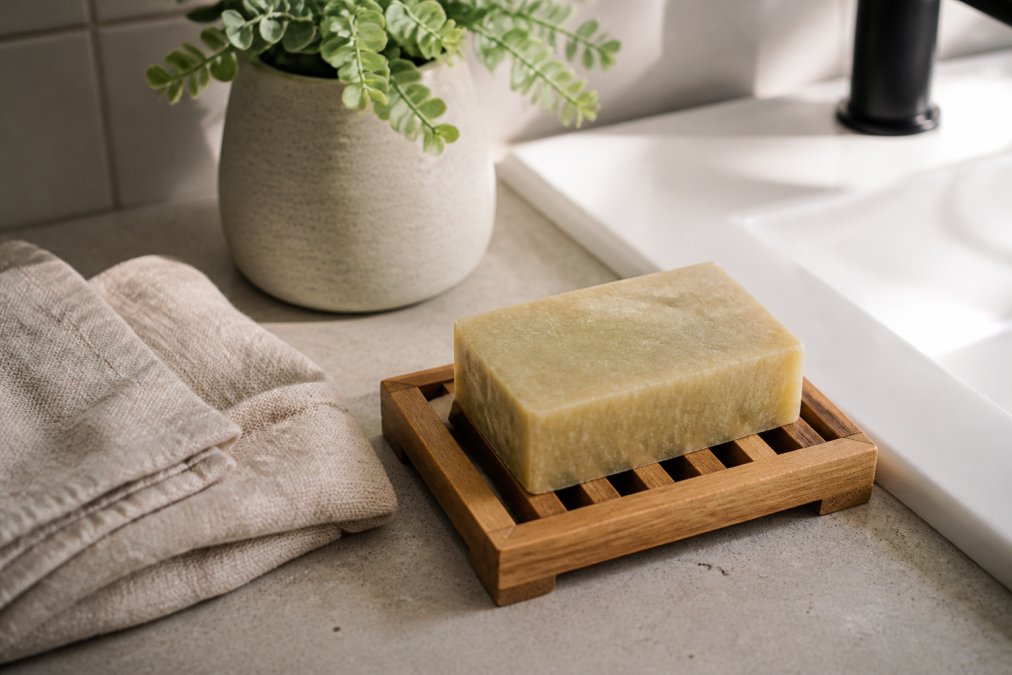
How to store handmade soap comes down to a few habits that work because they address that chemistry directly:
- Use a draining dish. Slats or raised ridges let water run off instead of pooling under the bar. A dish that holds water is the single fastest way to ruin a good bar.
- Keep it away from the direct shower spray. A bar in the splash zone never fully dries between showers, so it stays in a semi-dissolved state.
- Rotate your bars. If you bought several, store the extras in a cool, dark, dry place and bring them out one at a time. Airflow around a curing bar helps it harden further.
- Cut large bars in half. A full-size artisan bar can be split with a kitchen knife; use one half and keep the other wrapped and dry. Smaller bars have less surface area sitting in water and last proportionally longer.
- Skip airtight containers for daily-use bars. A sealed jar traps residual moisture. Paper, cloth, or an open shelf lets the bar breathe.
Cured olive oil bars actually improve with age. A bar left in a linen closet for a few months gets harder and longer-lasting, not worse. That's the opposite of how most people think about soap, and it's why buying a few bars at once and letting the extras sit is a reasonable strategy rather than a waste.
One more thing worth knowing: a white, chalky film on the surface of an older bar is called soda ash. It forms when unsaponified lye reacts with carbon dioxide in the air during curing. It's harmless, it rinses off, and it is not mold or spoilage. A genuinely spoiled bar, one that has gone rancid, will smell sharp or crayon-like and may show orange or brown spots. That's oxidation of the oils, and it usually traces back to a bar stored somewhere hot or damp for a long time.
Sustainability and Fair Trade in Artisan Soap
Sustainability in artisan soap comes down to three things: how the oils are sourced, how the soap is packaged, and whether the people growing the ingredients are paid fairly. Olive oil is a major agricultural export across the Mediterranean, and fair trade certification exists specifically to guarantee minimum prices and safe conditions for growers.
The Fair Trade Certified program overview explains how certification verifies supply chains from farm to finished product. When a soap maker can point to a certified olive oil supplier, that's a real signal rather than a marketing claim. But the word "fair trade" itself is not regulated the way "organic" is under the USDA National Organic Program, so a bar can carry the phrase on its label without any third-party audit behind it. The reliable markers are a named certifier, Fair Trade Certified, Fair for Life, or a USDA Organic seal, and a maker willing to name the specific supplier or cooperative.
Here's what the common labels actually verify, and where they stop:
- USDA Organic applies to agricultural ingredients. A soap bar can be labeled "made with organic ingredients" if a set percentage of its contents (excluding water and salt) is certified organic; "100% organic" is a much higher bar and rare in soap because lye is not an agricultural product.
- Fair Trade Certified focuses on producer pricing, labor conditions, and a premium paid back to the farming community. It says nothing about whether the finished soap is biodegradable or the packaging is recyclable.
- Cruelty-free and vegan claims are separate from both. "Cruelty-free" generally means no animal testing on the finished product or ingredients; "vegan" means no animal-derived ingredients such as tallow, honey, or beeswax. Neither is a sustainability claim on its own.
- "Natural" and "eco-friendly" have no legal definition for soap in the United States. Treat them as marketing language unless a certifier is named.
Small-batch production also tends to produce less waste than factory lines. Makers who pour by hand can reuse trim, avoid overproduction, and package in paper rather than plastic. None of that is automatic, but it's more achievable at small scale than at industrial volume, and it's worth asking a maker directly how they handle trimmings, seconds, and shipping materials, because the answer varies widely.
Palm oil is the other ingredient worth watching. Many soap recipes use palm or palm kernel oil alongside olive oil, and palm production is linked to deforestation in tropical regions. A bar that lists olive oil as its primary oil and omits palm entirely sidesteps that question. If palm is present, look for Roundtable on Sustainable Palm Oil (RSPO) certification or a maker who states their sourcing.
If sustainability is a priority, email the maker one question: "Which specific certifier backs your fair trade or organic claim, and who supplies your olive oil?" A maker with a real supply chain will answer with a name. A maker using the words as decoration will not.
Frequently Asked Questions
Is olive oil soap good for sensitive skin?
Yes. Olive oil soap for sensitive skin works because the saponified oils create a gentle cleanser without harsh sulfates or synthetic fragrance. The fatty acids and vitamin E in extra virgin olive oil leave behind a light emollient layer that supports the skin barrier. Look for fragrance-free or naturally scented bars, and check that the label lists olive oil as the first ingredient. If you react to most cleansers, a pure castile bar is a good starting point.
How can you tell if an olive oil soap is truly artisan and handcrafted?
Check the ingredient list first. A genuine artisan bar names recognizable ingredients like saponified olive oil, shea butter, and botanicals rather than a long list of synthetic additives. Look for small-batch language, cure times, and a maker with a traceable history. Irregular edges, slight color variation between bars, and a faint natural scent are normal in handmade soap. Uniform neon colors and strong perfume usually signal a commercial bar.
Does olive oil soap expire or go rancid over time?
Olive oil soap does not spoil like food, but the oils can eventually go rancid. Most handmade bars stay fresh for 12 to 18 months when stored away from heat, light, and moisture. Signs of rancidity include a sharp, crayon-like smell, a sticky surface, or orange spots. To extend shelf life, keep bars in a cool, dry place until you are ready to use them, and rotate your stock so older bars get used first.
How long do handmade olive oil soap bars actually last?
A well-cured artisan bar lasts longer than most people expect. With proper storage, a 4-ounce bar can last four to six weeks of daily shower use. The key is keeping it dry between uses. A draining soap dish, a quick rinse after each use, and rotating two bars so each dries fully will stretch the life of every bar. A $11 bar that lasts six weeks costs less per shower than you might think.