

Buy Cruelty Free Bath Products: 2026 Guide

Table of Contents
- What Cruelty Free Actually Means on a Bath Product Label
- How to Identify Animal Testing in Cosmetics Before You Buy
- Natural Ingredients for Sensitive Skin: What to Look For and What to Skip
- Best Eco Friendly Body Wash and Bar Options for Daily Use
- Cruelty Free Bath Products Compared: Price, Size, and What Each One Does
- Budget-Friendly DIY Alternatives and What They Cost
- Common Mistakes When Shopping for Cruelty Free Bath Products
- Conclusion
- Frequently Asked Questions
Last Updated: September 12, 2026
What Cruelty Free Actually Means on a Bath Product Label
To buy cruelty free bath products with confidence, know what the phrase legally covers. Cruelty free means no animals were used to test the finished formula or its ingredients at any stage of production. It says nothing about animal-derived ingredients or skin safety.
Here is where labels get slippery. The term is not defined by a single national standard, so a brand can print it based on its own internal policy. Gracie & Co. 1942 has made soap in small batches for three generations, and the biggest shift we have watched is how loosely "cruelty free" gets used as a marketing word.
Cruelty Free vs. Vegan: They Are Not the Same Claim
A product can be cruelty free and still contain beeswax, honey, lanolin, or milk. A product can be vegan and still have been tested on animals by a supplier upstream. Vegan describes what is in the formula; cruelty free describes what was done during development. You usually need both claims, stated separately.
How to Identify Animal Testing in Cosmetics Before You Buy
Identifying animal testing in cosmetics comes down to three checks: a recognized certification logo, a named parent company, and a readable supplier policy. Start with the certification, then verify who owns the brand, because small brands are frequently acquired by larger companies with different testing histories.
Certifications worth trusting name a specific program and publish a searchable brand list. Ignore any custom leaf, paw, or bunny graphic the brand drew itself, and any phrasing like "against animal testing" with no program behind it.
Certifications That Carry Weight, and Badges That Do Not
| What you see | What it actually means | Trust level |
|---|---|---|
| Recognized program logo with a registry entry | Independent verification, brand is listed publicly | High |
| Brand's own bunny graphic | Self-declared, no third-party review | None |
| "Not tested on animals" text only | Self-declared claim, unverified | Low |
| Named parent company with a stated policy | You can trace the corporate testing stance | Medium |
| "Vegan" alone | Covers ingredients, not testing | Partial |
The FDA guidance on cosmetic labeling claims is clear that cosmetic claims must be truthful and not misleading, but it does not pre-approve cruelty free statements, which is exactly why third-party certification matters so much.
Natural Ingredients for Sensitive Skin: What to Look For and What to Skip
For sensitive skin, look for short ingredient lists built on olive oil, shea butter, glycerin, and colloidal oat, and skip synthetic fragrance, sulfates, and drying alcohol. A bar with eight recognizable ingredients will almost always treat reactive skin better than one with thirty.

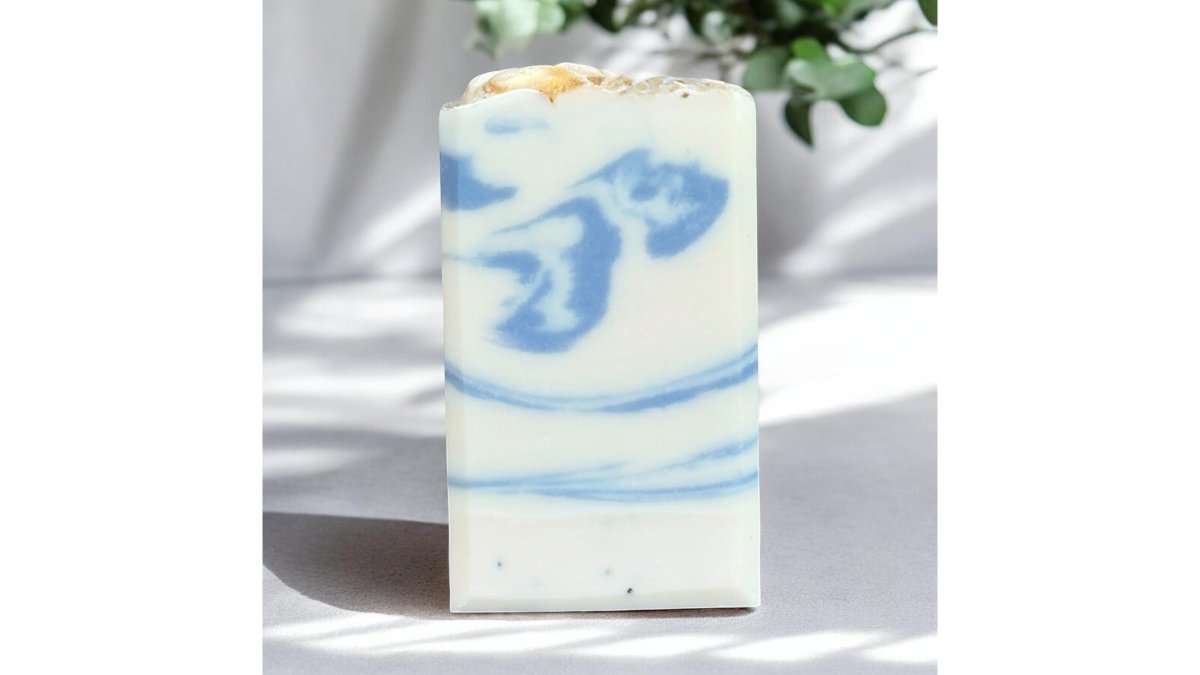
Watch for the word "fragrance" on its own. Under current labeling rules it can stand in for dozens of undisclosed compounds, and it is a frequent culprit behind irritation from products marketed as natural. If a brand lists essential oils instead, you can at least see what you are getting.
Sulfate-free matters too. Sulfates create that big, foamy lather people associate with clean, but they strip the skin barrier in the process. A dermatology resource on cleansing and skin barrier function explains that gentle, pH-balanced cleansers help preserve the skin's natural moisture. That is the tradeoff: less foam, healthier skin.
Filtering by Skin Type: A Practical Matrix
Most cruelty-free bath product lists are generic. The real value is matching the formula to your diagnosis, because what calms eczema can aggravate acne and vice versa. Use this matrix as a starting filter, then patch test.
| Skin concern | Ingredients that tend to help | Ingredients to avoid | Format that works best |
|---|---|---|---|
| Eczema / atopic dermatitis | Colloidal oat, shea butter, glycerin, ceramides, panthenol | Synthetic fragrance, essential oils in high concentration, sulfates, drying alcohol | Fragrance-free bar or a colloidal oatmeal soak; keep water lukewarm |
| Psoriasis | Salicylic acid (mild), urea, colloidal oat, mineral-rich salts | Harsh exfoliants, synthetic fragrance, sulfates | Magnesium or mineral bath soak, then a rich shea bar |
| Acne-prone (face and back) | Salicylic acid, kaolin or bentonite clay, charcoal, tea tree in low dilution | Heavy butters on the face, coconut oil on acne-prone skin, synthetic fragrance | Separate facial bar and body bar; avoid shared washcloths |
| Rosacea / reactive | Colloidal oat, glycerin, green tea, aloe | Essential oils, menthol, peppermint, physical scrubs, hot water | Fragrance-free, low-foam bar; cool rinse |
| Very dry / winter skin | Shea butter, cocoa butter, coconut milk, glycerin | Sulfates, high-alcohol toners, long hot soaks | Bath truffle or whipped shea wash, then seal with body butter |
A few mechanics worth knowing. Colloidal oat forms a protective barrier and reduces itch signaling, which is why it appears in so many eczema products. Glycerin is a humectant: it pulls water toward the skin, but in very dry climates it can pull from the skin instead, so layer it under an occlusive like shea or cocoa butter. Salicylic acid dissolves the keratin plugs behind acne and psoriasis scaling, but it is drying, so keep it in a targeted product, not an all-over daily bar.
If you have a diagnosed condition, treat the matrix as a shopping filter, not a treatment plan. A dermatologist can say whether an active like salicylic acid or urea belongs in your routine, and at what strength.
Best Eco Friendly Body Wash and Bar Options for Daily Use
The best eco friendly body wash for most people is a bar, not a bottle: bars ship without plastic, last longer per ounce, and skip the water weight that makes liquid cleansers heavy to transport. If you prefer a liquid feel, a whipped soap in a reusable jar is the closest middle ground.
For daily use, match the format to your skin:
- Dry or reactive skin: a shea butter bar with sea salt and agave, which cleanses and gently exfoliates in one step
- Normal skin: a whipped shea body wash that doubles as a shaving cream, cutting one product out of your routine
- Blemish-prone skin: an activated charcoal and clay facial bar for the face, kept separate from your body bar
- Bath lovers: a foaming bath truffle or a magnesium bath bomb for a soak that actually conditions rather than just fizzing
Gracie & Co. 1942 builds every one of these formats around the same base: organic olive oil, shea butter, and botanicals, with no sulfates, parabens, or synthetic fillers.
Cruelty Free Bath Products Compared: Price, Size, and What Each One Does
Comparing price per ounce rather than sticker price changes the picture. A $12 bar that lasts two months costs less per shower than a $6 bottle that empties in three weeks, with no plastic waste.
| Product | Price | Size | Best for |
|---|---|---|---|
| Sea Salt Agave Shea Butter Soap | $12.00 | 5.3 oz bar | Daily cleansing, gentle exfoliation |
| 2-in-1 Whipped Shea Body Wash & Shaving Cream | $22.00 | 8 oz jar | Dry skin, shaving, multi-use |
| Aromatherapy Botanical Shower Steamer | $8.00 | 3.5 oz | Shower-only aromatherapy, sinus relief |
| Magnesium Recovery Bath Bombs | $12.00 | 5 oz | Muscle recovery, post-workout soaks |
| Cocoa Butter & Coconut Milk Bath Truffle | $11.00 | 3 oz | Deep moisture for very dry skin |
| Solid Shampoo Bar | $20.00 | 4 oz | Zero-waste hair care, 60-80 washes |
| 4-Piece Premium Spa Gift Set | $75.00 | 4 items | Gifting, full routine in one box |
The FTC guidance on environmental marketing claims is worth reading before you pay a premium for "eco-friendly" language, because packaging claims are regulated differently from ingredient claims and not every green word on a label is backed by a standard.

Budget-Friendly DIY Alternatives and What They Cost
DIY bath products work best as a supplement, not a full replacement. A simple sugar scrub takes three ingredients and five minutes, and costs a fraction of a jarred version. Oatmeal baths for irritation are similarly cheap and effective.
What DIY cannot easily replicate is a properly saponified bar. Cold-process soap requires sodium hydroxide, precise measurement, and a four-to-six week cure. That is why handcrafted soap costs more than the drugstore bar.
The Chemistry That Separates a Good DIY From a Bad One
Most DIY guides skip the chemistry, which is where things go wrong. Two concepts matter more than any recipe.
Surfactants and the sulfate question. A surfactant has a water-loving head and an oil-loving tail; it lifts oil and dirt so water can rinse them away. Sulfates like sodium lauryl sulfate (SLS) and sodium laureth sulfate (SLES) are cheap, high-foam surfactants that bind strongly to skin proteins and can strip the barrier. Gentler alternatives include coco-glucoside, decyl glucoside, cocamidopropyl betaine, and sodium cocoyl isethionate. They foam less, which is why a "natural" wash feels different in the hand. In DIY, the closest mild surfactant is castile soap, but it is alkaline and can still dry reactive skin.
Preservation and water activity. Any DIY product containing water, aloe, hydrosol, or milk is a microbial growth medium. A sugar scrub made with oil and sugar has almost no water, so it stays stable for a couple of weeks. Add water or fresh aloe and you introduce spoilage risk that vitamin E will not solve, because vitamin E is an antioxidant, not a preservative. For a water-based DIY to last, you need a real broad-spectrum preservative, and those specialty ingredients erode the cost savings.
Three DIY Projects, Ranked by Difficulty and Real Cost
Costs below are typical grocery and pharmacy prices for small quantities; buying in bulk lowers the per-use figure.
| Project | Ingredients | Approx. cost | Shelf life | Difficulty |
|---|---|---|---|---|
| Sugar or salt scrub | 1 cup sugar or salt, 1/2 cup carrier oil, 10-15 drops essential oil | $3-$6 for several uses | 2-4 weeks, keep water out | Easy |
| Colloidal oatmeal bath | 1 cup finely ground rolled oats, optional 1/4 cup powdered milk | $1-$3 per bath | Make fresh each time | Easy |
| Bath soak with Epsom or magnesium salts | 2 cups Epsom salt, 1/4 cup baking soda, optional essential oil | $2-$4 per bath | Months if kept dry | Easy |
| Whipped body butter | 1/2 cup shea butter, 1/4 cup carrier oil, optional arrowroot | $8-$14 per jar | 3-6 months | Moderate |
| Cold-process soap bar | Oils, lye, water, fragrance or essential oil | $15-$30 for a small batch | 1 year+ after cure | Advanced |
A simple starting recipe:
- 1 cup white or brown sugar
- 1/2 cup carrier oil (olive, coconut, or sweet almond)
- 10-15 drops essential oil of your choice
- Mix in a jar, use within two weeks, keep water out of the container
Total cost runs a few dollars for several uses. Compared to a handcrafted foaming sugar scrub, the DIY version wins on price but loses on lather, preservation, and shelf life.
If you want the DIY price without the chemistry homework, buy a concentrated bar or whipped shea wash and stretch it: cut bars in half, store them dry, and use a loofah to build lather from less product. That gets most of the cost savings with none of the spoilage risk.
Common Mistakes When Shopping for Cruelty Free Bath Products
The biggest mistake is buying on the front label alone. Marketing copy is written to sell; the back label is where the real information lives. Flip the package over before you decide.
Four more traps worth naming:
- Assuming "natural" means gentle. Poison ivy is natural. Natural describes origin, not safety.
- Confusing "fragrance-free" with "unscented." Unscented products can contain masking fragrance to cover the smell of raw ingredients.
- Ignoring bar storage. A handmade bar left sitting in water dissolves in weeks. A draining dish roughly doubles its life.
- Trusting a badge with no registry. If you cannot search the brand on the certifying program's own site, the badge is decoration.
Conclusion
Sorting real cruelty free claims from decorative ones takes about thirty seconds per product once you know where to look, and it saves you from paying a premium for a label with nothing behind it. Gracie & Co. 1942 makes that check easy: small-batch bars built on organic olive oil, shea butter, and botanicals, with no sulfates, parabens, or synthetic fillers, and a cruelty-free, eco-friendly process unchanged in three generations. Start with the Sea Salt Agave Shea Butter Soap for daily use, add the 2-in-1 Whipped Shea Body Wash for dry skin, and see the difference a short ingredient list makes. Shop now and build a routine your skin and your conscience can both live with.
Frequently Asked Questions
How can I verify if a bath product is truly cruelty-free?
Check for third-party certification first. The Leaping Bunny program requires a brand to audit its entire supply chain, including ingredient suppliers, not just the finished product. A brand's own 'we don't test' statement carries less weight because it is self-reported. You can also email the company and ask whether its suppliers test ingredients on animals, since that is where most animal testing in cosmetics actually happens. If the answer is vague, treat the claim as unverified.
What is the difference between cruelty-free and vegan bath products?
Cruelty-free means no animal testing occurred at any stage, including ingredient sourcing. Vegan means the formula contains no animal-derived ingredients such as honey, beeswax, lanolin, or milk. A product can be vegan but still tested on animals, and a product can be cruelty-free but contain beeswax. If both matter to you, look for labels that state both, and check the ingredient list for animal byproducts.
Are there affordable cruelty-free body wash options?
Yes. Handcrafted bar soaps often cost less per use than bottled body wash because a 5.3 oz bar lasts through many showers, while an 8 oz whipped body wash runs about six to eight weeks with daily use. Bars in the $8 to $12 range and bath bombs at $12 sit in the same territory as drugstore body wash once you calculate cost per shower. Buying bars instead of bottles also cuts packaging waste.
Which certifications should I look for on bath product labels?
The Leaping Bunny certification is the most rigorous because it requires an independent audit of the full supply chain and annual renewal. Vegan-certified logos verify no animal ingredients but say nothing about testing. USDA Organic and similar marks cover farming and ingredients, not animal testing. A label can carry several badges, so read what each one actually verifies rather than assuming any logo means the product is cruelty-free.
Why choose small-batch handcrafted bath products over mass-market brands?
Small-batch makers typically list every ingredient, produce in volumes small enough to control sourcing, and can tell you exactly where their shea butter or olive oil comes from. Mass-market brands often rely on contract manufacturers and undisclosed supplier networks, which makes tracing animal testing harder. Handcrafted bars also tend to skip sulfates, parabens, and synthetic fragrance, which matters if your skin reacts to those ingredients.
This article is for general information only and is not medical advice. If you have a diagnosed skin condition or a history of reactions, consult a qualified dermatologist before changing your routine.