

How to Identify Truly Natural Soap: A Step-by-Step Guide

Table of Contents
- Understanding Saponification and How Natural Soap Is Made
- How to Read Soap Labels and Spot Greenwashing
- Common Soap Ingredients to Avoid
- Natural Soap vs. Synthetic Detergent: Key Differences
- The Role of Plant-Based Oils and Botanicals
- How to Identify Truly Natural Soap: Physical Clues and Shelf Life
- Environmental Impact and Ethical Sourcing Practices
- Frequently Asked Questions
Last Updated: September 18, 2026
Understanding Saponification and How Natural Soap Is Made
Saponification is the chemical reaction that turns oils and fats into soap. When you combine plant-based oils with sodium hydroxide (lye) and water, a transformation happens. The lye breaks down the oil molecules, creating soap and glycerin.
True soap comes from saponification; everything else is technically a detergent or cleansing bar.
Both cold process (weeks to cure) and hot process (faster, more skill) methods preserve glycerin that commercial manufacturers strip out to sell separately.
Oils are measured precisely, mixed with lye solution at specific temperatures, and poured into molds to cure for 4-6 weeks, allowing water to evaporate and the bar to harden.
At Gracie & Co. 1942, we follow traditional saponification methods passed down through three generations. This commitment to the authentic process is why our soaps maintain their natural glycerin and botanical benefits.
How to Read Soap Labels and Spot Greenwashing
If you see "sodium hydroxide" listed, the soap maker is transparent about saponification; the lye reacts completely during curing and doesn't remain in the finished product.
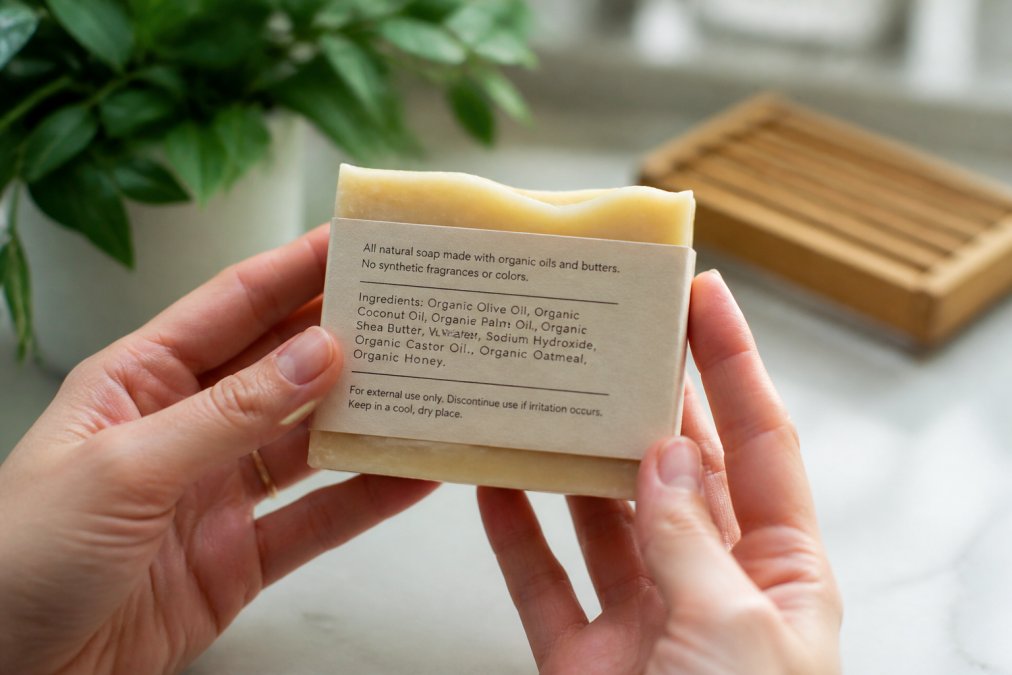
Red Flags in Ingredient Lists
Look for these red flags when reading labels:
- "Fragrance" or "parfum" without specification (often synthetic)
- "Sodium lauryl sulfate" or "sodium laureth sulfate" (harsh detergents)
- "Phthalates" (chemicals linked to endocrine disruption)
- Vague terms like "natural fragrance blend" without ingredient breakdown
- Claims like "organic" without certification backing them up
- "Phenoxyethanol" (synthetic preservative)
- "Methylisothiazolinone" (antimicrobial preservative banned in rinse-off products in the EU)
True transparency means listing every ingredient; vague terminology is a warning sign.
Honest markers include a full ingredient list with specific oil names, individual botanical extracts, no synthetic colors or preservatives, and third-party certifications.
Decoding Greenwashing: Buzzwords That Don't Guarantee Natural Soap
Greenwashing happens when brands use words like "natural," "eco-friendly," or "botanical" without real substance behind them. A soap can say "natural" and still contain synthetic preservatives, artificial dyes, and harsh surfactants. Learning to spot misleading marketing language is essential.
"Natural", No legal definition; the FDA doesn't regulate it. Look for "100% natural ingredients" paired with a full ingredient list you recognize.
"Gentle", Vague without specifics. Pair it with claims like "sulfate-free" or "pH-balanced."
"Botanical", Check ingredient list order; if botanicals appear near the end, they're present in tiny amounts.
"Organic", Only meaningful with certification logos (USDA Organic, ECOCERT). Verify the certification number.
"Sulfate-free", All true natural soap is sulfate-free; the claim only matters if the soap contains sulfates.
"Cruelty-free", Unregulated; look for logos from Leaping Bunny, PETA, or Choose Cruelty-Free.
"Hypoallergenic", Unregulated and meaningless. For sensitive skin, focus on ingredient transparency.
"Dermatologist-tested", Weak claim. More meaningful is "dermatologist-recommended" with the dermatologist's name and credentials.
Testing Soap pH at Home: A Concrete Quality Indicator
Test soap pH using pH test strips. Your skin is naturally 4.5-5.5 pH; natural soaps typically fall in the 8-10 range. A pH above 10 can strip your skin's protective acid mantle, especially for sensitive skin.
How to test:
- Wet a small piece of the soap bar with distilled water
- Rub the wet soap onto a pH test strip
- Wait 30 seconds and compare the color to the chart on the strip packaging
- Record the pH number
High-quality natural soap has a pH between 8 and 10. Above 11 indicates insufficient curing or incorrect oil-lye ratio; below 8 suggests artificial pH-lowering additives.
If a brand publishes their soap's pH, that's a sign of transparency and quality assurance.
Purify French Green Clay & Sea Moss →
What to Demand from Labels
A truly transparent natural soap label includes:
- Full ingredient list in descending order by weight
- Production date or batch number (so you can verify freshness)
- Expiration date or "best by" date
- Instructions for storage
- Contact information for the maker (email or phone)
- Any certifications with verifiable logos
- Optional but valuable: pH level, oil types used, and cure time
If a brand refuses to provide any of this information, that's a red flag. Natural soap makers who stand behind their product are transparent. Vagueness is a sign the brand is hiding something.
Common Soap Ingredients to Avoid
Sulfates like sodium lauryl sulfate strip natural oils and break down your skin barrier; many switch to natural soap to escape them.
Parabens are preservatives that mimic estrogen; concern centers on long-term accumulation, especially for sensitive skin.
Phthalates make fragrances last longer and hide under "fragrance" on labels.
Ingredients to skip:
- Triclosan (antibacterial agent linked to hormone disruption)
- Synthetic dyes (FD&C colors, which are petroleum-derived)
- Dimethicone (silicone that coats skin and prevents moisture absorption)
- Formaldehyde releasers (preservatives that break down into formaldehyde)
- Mineral oil (petroleum byproduct that clogs pores)
- Polyethylene glycol (PEG compounds that can carry contaminants through skin)
Natural Soap vs. Synthetic Detergent: Key Differences
Natural soap comes from saponification of plant oils. Synthetic detergent is manufactured in a lab from petroleum derivatives. The difference shows up in how your skin feels and how long the bar lasts.
Here's the practical breakdown:
| Characteristic | Natural Soap | Synthetic Detergent |
|---|---|---|
| Source | Plant oils via saponification | Lab-created from chemicals |
| Glycerin content | Retains natural glycerin | Glycerin removed for sale |
| Lather | Creamier, less bubbly | Abundant lather and bubbles |
| Skin feel | Moisturizing, softer | Can feel tight or dry |
| Shelf life | 12-18 months with proper storage | 2+ years |
| Biodegradable | Yes, breaks down naturally | Slower to biodegrade |
| Price point | Higher | Lower |
| Skin barrier impact | Supports and protects | Can compromise over time |
The Role of Plant-Based Oils and Botanicals
Plant-based oils are the foundation of natural soap: olive oil moisturizes, coconut oil creates lather, shea butter nourishes, and castor oil increases creaminess.
Key plant-based ingredients and what they do:
- Olive oil: Moisturizing, gentle, creates creamy lather
- Coconut oil: Cleansing power, creates abundant lather
- Shea butter: Deeply nourishing, adds luxury feel
- Castor oil: Increases creaminess and skin conditioning
- Essential oils: Therapeutic benefits plus natural fragrance
- French green clay: Detoxifying, absorbs excess oil
- Sea moss: Mineral-rich, supports skin barrier
- Oatmeal: Gentle exfoliation, soothing for irritated skin
How to Identify Truly Natural Soap: Physical Clues and Shelf Life
Truly natural soap varies in color batch to batch (no synthetic dyes) and shows uneven color as proof of handmade origin.
Physical markers of truly natural soap:
- Color varies slightly from bar to bar
- Texture is creamy, not slick
- Lather is rich but not excessive
- Bar feels substantial and dense
- No artificial shine or uniformity
- May have visible botanicals (clay, oatmeal, herbs)
- Slight variations in size and shape
Understanding Shelf Life and Rancidity
Natural soap relies on natural antioxidants rather than synthetic preservatives. Once depleted, oils break down and the soap becomes rancid.
Proper Storage to Extend Shelf Life
Natural soap is sensitive to moisture, heat, and light. Controlling these factors can extend shelf life.
Comparing Shelf Life: Natural vs. Commercial
Commercial soap lasts longer due to synthetic preservatives; natural soap's shorter life is proof of authenticity and the intentional trade-off for skin-safe, biodegradable ingredients.
High-quality soaps use oils with high antioxidant content.
Red Flags for Expired or Poor-Quality Natural Soap
- Sour or rancid smell (like old oil or vinegar)
- Soft, mushy texture that crumbles easily
- Mold or discoloration (dark spots or fuzzy growth)
- Separation (oils pooling on the surface)
- Overly long shelf life claim (if a brand claims 3+ years for natural soap with no preservatives, it likely contains synthetic additives)
Environmental Impact and Ethical Sourcing Practices
Natural soap biodegrades without harming aquatic life; commercial detergent bars accumulate in waterways.
Frequently Asked Questions
What ingredients should I look for when trying to identify truly natural soap?
Look for plant-based oils like olive oil, coconut oil, and shea butter as primary ingredients. The ingredient list should include sodium hydroxide (lye, which is consumed during saponification) and essential oils or natural colorants like clay and mineral pigments. Avoid synthetic fragrances, parabens, phthalates, and sulfates. Handcrafted soaps made through cold process or hot process methods typically retain glycerin, which commercial detergent bars strip away for profit.
How can I tell if a soap label is greenwashing?
Greenwashing uses vague terms like 'natural-inspired' or 'botanical extracts' without listing actual ingredients. True natural soap has a complete, transparent ingredient list with recognizable names. Watch for buzzwords like 'gentle' or 'pure' without supporting details. Check if the brand discloses sourcing practices and production methods. Gracie & Co. 1942 provides three generations of soap-making expertise and lists all ingredients clearly, so you know exactly what you're buying.
What is the difference between cold-process soap and commercial detergent bars?
Cold-process soap uses plant-based oils combined with sodium hydroxide in a slow chemical reaction called saponification, which preserves glycerin for skin hydration. Commercial detergent bars skip saponification entirely and use synthetic surfactants and foaming agents, stripping away natural glycerin. Detergent bars clean effectively but often leave skin dry. Natural soap made through cold process or hot process methods is gentler and retains the moisturizing properties that benefit sensitive skin.
Why doesn't the FDA regulate the term 'natural' on soap labels?
The FDA treats soap as a cosmetic when marketing skin benefits, but the term 'natural' has no legal definition for soaps. This allows companies to use 'natural' loosely without strict oversight. To identify truly natural soap, rely on transparent ingredient lists, third-party certifications, and brands with proven heritage like Gracie & Co. 1942, which documents its three-generation family tradition and uses only 100% natural ingredients without synthetic fillers or chemicals.