

How to Moisturize Sensitive Skin: A Complete Guide

Table of Contents
- Understanding Sensitive Skin Triggers and Your Skin Barrier
- Best Natural Ingredients for Sensitive Skin
- How to Patch Test Skincare Products Safely
- Step-by-Step Moisturizing Routine for Sensitive Skin
- Adjusting Your Routine for Seasonal and Environmental Changes
- Common Mistakes That Damage Sensitive Skin
- When to Consult a Dermatologist
- Conclusion
- Frequently Asked Questions
Last Updated: September 4, 2026
Sensitive skin is a spectrum of reactions, and the wrong moisturizer can worsen flare-ups. Learning to moisturize effectively means prioritizing barrier repair over surface hydration. This guide breaks down triggers, calming ingredients, and a routine that controls redness and tightness affordably.
Most people treat symptoms with heavy creams instead of fixing the underlying barrier. A compromised barrier allows moisture to escape and irritants to enter, causing tightness and stinging. Below is how to rebuild it with a step-by-step routine, effective ingredients, and mistakes to avoid.
Understanding Sensitive Skin Triggers and Your Skin Barrier
Your skin barrier is the outermost epidermis layer, acting as a wall that keeps hydration in and pollutants out. When weakened, transepidermal water loss increases, leaving skin dry, flaky, and red, the root cause of most sensitivity.
What Causes Sensitivity
Triggers vary widely: harsh surfactants strip oils, fragrances provoke immune responses, and environmental factors like wind and low humidity accelerate moisture loss. Keep a simple log of products and flare-up timing to identify your specific triggers.
Signs of a Damaged Skin Barrier
A damaged barrier shows persistent tightness after washing, visible redness, stinging, and rough patches. Feeling "dry but oily" simultaneously signals barrier dysfunction requiring targeted support, not just more moisturizer.
Best Natural Ingredients for Sensitive Skin
The best ingredients fall into three categories: humectants (glycerin, hyaluronic acid, aloe vera) pull water into skin; emollients (shea butter, squalane, chamomile) smooth between cells; occlusives (plant waxes, butters) seal moisture in.

Humectants and Emollients That Calm
Glycerin is the most effective humectant for reactive skin. Niacinamide supports ceramide production and reduces inflammation. Shea butter mimics natural sebum; aloe vera soothes heat and redness; oat extract calms itching. Look for these in the first half of ingredient lists.
Ingredients to Avoid Completely
Avoid fragrance (the leading cause of allergic contact dermatitis), denatured alcohol (strips lipids), sulfates (disrupt microbiome), synthetic dyes, and certain preservatives. If fragrance appears on the label, skip it.
How to Patch Test Skincare Products Safely
Patch testing is the only reliable way to test new products safely. The 48-hour process saves weeks of recovery. Test on a small, less-visible area like your inner forearm or behind your ear.
| Step | Action | Duration | What to Watch For |
|---|---|---|---|
| 1 | Apply a pea-sized amount to clean skin | Day 1 | Immediate stinging or burning |
| 2 | Cover with a bandage if testing on forearm | 24 hours | Redness, bumps, or itching |
| 3 | Reapply the same amount to the same spot | 48 hours | Delayed reactions, swelling |
| 4 | Evaluate the test area | After 48 hours | Any reaction means do not use on face |
If no reaction appears after 48 hours, the product is likely safe. Start with every-other-day application the first week. Introduce new products one at a time, waiting two weeks between additions.
Step-by-Step Moisturizing Routine for Sensitive Skin
A proper routine follows this order: cleanse, layer hydration, seal with occlusive. This maximizes moisture retention while minimizing irritation in under five minutes. Note: acne or rosacea treatments require adjusted timing.
Step 1: Cleanse Gently Without Stripping
If your cleanser leaves skin "squeaky clean," it has stripped your barrier. Choose a non-foaming, sulfate-free cream cleanser or gentle bar soap with olive and shea oils. Use lukewarm water, massage 30 seconds, and pat dry.
Step 2: Apply Hydrating Layers
While skin is slightly damp, apply hydrating products with glycerin, hyaluronic acid, or aloe vera. Damp skin absorbs humectants more effectively. Use a nickel-sized amount and press gently rather than rub.
For acne treatments (benzoyl peroxide, salicylic acid, adapalene): Apply hydrating serum, wait 2-3 minutes, then apply treatment to dry skin. After 5-10 minutes, apply occlusive. This "sandwich method" reduces irritation by 40-60% (peer-reviewed research).
For rosacea treatments (metronidazole, sulfacetamide, azelaic acid): Apply hydrating serum, let it dry, then apply treatment. Wait 10 minutes before proceeding to Step 3.
For retinoids (tretinoin or retinol): Apply only to completely dry skin. Wait 15-20 minutes after cleansing, apply pea-sized amount, wait another 15-20 minutes, then apply hydrating serum and occlusive. Never hydrate before retinoids. For sensitive skin, use retinoid 2-3 times weekly the first month, gradually increasing.
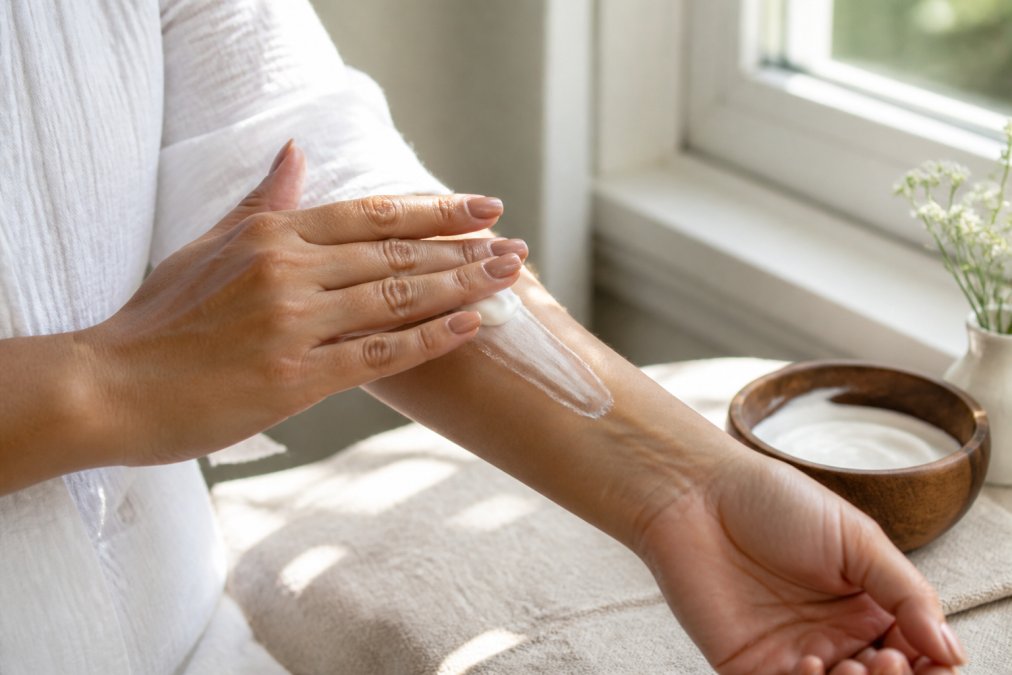
Step 3: Lock in Moisture with Occlusive Products
The final step seals moisture in with an occlusive like body butter or balm. Gracie & Co. 1942's Soothing Aloe Hand & Body Butter combines aloe with mango and shea butters. For extremely dry patches, their Silk Radiance Organic Body Butter with 80% organic shea butter provides concentrated repair.


For acne or rosacea treatments: The occlusive step is essential. It reduces irritation, redness, and peeling, especially with benzoyl peroxide and azelaic acid.
For retinoids: Apply occlusive 20-30 minutes after retinoid application to allow full penetration, then seal. This locks in hydration and reduces irritation and peeling.
Timing and Frequency for Treated Skin
Moisturizing frequency matters with active treatments. Use twice daily for acne or rosacea treatments, nightly for retinoids. During the first 4-6 weeks, consider a midday application if skin feels tight.
Common Medication and Moisturizer Interactions to Avoid
Avoid vitamin C within 2 hours of benzoyl peroxide. Avoid niacinamide immediately before or after azelaic acid. With tretinoin, avoid exfoliating acids. When in doubt, consult your dermatologist about timing.
When in doubt, consult your dermatologist about the specific order and timing of your moisturizer and treatment. A 30-second conversation can prevent weeks of unnecessary irritation.
Adjusting Your Routine for Seasonal and Environmental Changes
Sensitive skin shifts with seasons and environment, requiring routine adjustments. Failing to adapt is why people abandon routines, mistaking environmental changes for worsened skin.
Winter: Cold Air and Indoor Heating
Winter reduces sebum production and drops humidity to 20-30% (vs. preferred 30-65%), accelerating water loss by up to 25% (peer-reviewed research).
Switch to richer cream or butter-based occlusives. Keep hydrating serums but layer under heavier emollients. Reduce cleansing to once daily with lukewarm water. Add facial oil or squalane between serum and occlusive for extra emollient and occlusive benefits.
A bedroom humidifier running 6-8 hours nightly raises humidity to 40-50%, reducing barrier stress more effectively than any single product.
Spring and Fall: Transition Periods
Spring and fall have daily temperature swings. Keep both lightweight and heavy moisturizers accessible and adjust based on daily conditions.
Use lighter hydrating serum with gel-cream on humid days (above 50%). Layer richer occlusive on dry days. This prevents under- and over-moisturizing.
Spring pollen and mold can trigger inflammation. Add niacinamide to reduce histamine response and support barrier function after cleansing.
Summer: Heat and Humidity
Summer humidity (60-80%) reduces barrier stress, but heat increases sebum. Reduce occlusive layers or switch to lighter alternatives.
Use hydrating serum or essence with lightweight lotion or gel-cream. Reduce facial oil to 2-3 times weekly. A glycerin toner with niacinamide moisturizer often suffices.
UV and chlorine/saltwater damage the barrier. Apply mineral sunscreen daily. If swimming, rinse immediately and reapply moisturizer within 10 minutes.
High-Pollution and High-Stress Days
On high-pollution days, add an antioxidant serum (niacinamide, vitamin C, or green tea) after cleansing to neutralize free radicals and reduce inflammation.
During high stress, add calming ingredients like centella asiatica or allantoin, and avoid introducing new products.
Building a Flexible Product Wardrobe
An effective approach needs just three core products: (1) fragrance-free cleanser, (2) hydrating serum with glycerin or hyaluronic acid, (3) lightweight and rich moisturizers for seasonal rotation. This costs less than one premium moisturizer.
Keep a simple log of which products you use each month and how your skin responds. Over time, you will identify the exact transition points when your skin signals it needs a richer or lighter formula. This personalized seasonal map becomes your guide for years to come.
Common Mistakes That Damage Sensitive Skin
Common mistakes: over-exfoliating with scrubs or daily acids, using hot water, applying moisturizer to bone-dry skin, layering too many actives, and skipping sunscreen. Each damages the barrier.
When to Consult a Dermatologist
While most sensitivity can be managed with the right routine, certain signs warrant professional evaluation. If your skin does not improve after four to six weeks of a consistent, gentle routine, or if you experience persistent swelling, crusting, or pain, see a board-certified dermatologist. They can perform patch testing to identify specific allergens and prescribe barrier-repair medications that are stronger than anything available over the counter. Additionally, if your sensitivity appeared suddenly after years of trouble-free skin, that change warrants investigation. According to the American Academy of Dermatology's guidance on sensitive skin, persistent reactions that do not respond to gentle care may indicate an underlying condition such as rosacea or eczema that requires a prescription treatment plan.
Conclusion
Moisturizing sensitive skin requires elimination, consistency, and seasonal adjustment, not a miracle product. Focus on barrier repair with fragrance-free humectants and occlusives, patch test everything. Gracie & Co. 1942 offers natural body butters and soaps with olive oil, shea butter, and aloe vera. Their Manuka Honey Oats & Coconut Milk Shea Butter Soap and Rose French Pink Clay & Sea Moss Facial Soap provide gentle cleansing for sensitive skin.
Frequently Asked Questions
Why is my skin still dry even though I moisturize sensitive skin daily?
Dryness persists when your skin barrier is compromised or when you're using products that strip moisture faster than you can replace it. If you're using harsh cleansers, over-exfoliating, or applying moisturizer to completely dry skin, water evaporates quickly (transepidermal water loss). Apply moisturizer to damp skin within 60 seconds of cleansing to trap hydration. Look for products with ceramides, hyaluronic acid, and glycerin to improve moisture retention.
What ingredients should I avoid if I have sensitive skin?
Avoid fragrance (even 'natural' essential oils can irritate), alcohol denat, sulfates, parabens, and synthetic dyes. Fragrance is the leading cause of contact dermatitis. Avoid products labeled 'unscented' if they contain fragrance-masking chemicals. Instead, choose fragrance-free, hypoallergenic products. Products like our Rose French Pink Clay & Sea Moss Facial Soap are formulated without these irritants, making them safer for reactive skin.
How do I know if a moisturizer will irritate my sensitive skin before using it all over my face?
Always patch test first. Apply a small amount behind your ear or on your inner arm, wait 24-48 hours, and watch for redness, itching, or burning. This simple step prevents full-face reactions. If the patch test passes, apply to a small facial area (jawline) for 3-5 days before full use. Keep a journal of products and reactions to identify patterns. This method helps you confidently add new moisturizers to your routine without triggering flare-ups.
What's the difference between sensitive skin and a damaged skin barrier?
Sensitive skin is often genetic or triggered by specific ingredients, while a damaged barrier is a condition where the skin's protective layer is compromised, causing increased sensitivity. Signs of a damaged skin barrier include persistent redness, inflammation, excessive dryness, and reactions to products that never bothered you before. Repair requires ceramides, squalane, and gentle cleansing for 2-4 weeks. If your sensitivity is new or worsening, focus on barrier repair with products containing lipids and humectants.
This article was written using GrandRanker