How to Shop for Soap: A Guide to Natural Bars

Last Updated: October 23, 2026
Quick Summary
To shop for soap, read the ingredient list before the front label, match the bar to your skin, and pick a format you'll actually use. Look for a short list of pronounceable ingredients, no sulfates or parabens, and a bar that fits how you bathe.
- Words like pure and gentle aren't regulated on soap packaging, so check the ingredient list instead.
- Compare cost per use, not sticker price, since a longer-lasting bar is the better buy.
- Shea butter helps skin hold moisture, coconut milk makes creamy lather, and kaolin clay gently lifts dirt.
- Cold process bars are cured for weeks, which makes them harder and longer-lasting.
- Keep your bar dry on a draining dish between uses so it doesn't dissolve fast.
Table of Contents
- How to Shop for Soap Without Getting Overwhelmed
- What to Look for When You Shop for Soap
- Natural Bar Soap Ingredients That Actually Help
- What Cold Process Soap Means for You
- The Best Natural Soap for Dry Skin
- Handmade Soap for Dry Skin: Bar vs. Liquid
- Our Tip
- Frequently Asked Questions
How to Shop for Soap Without Getting Overwhelmed
Walk down any soap aisle and you'll see dozens of bars and bottles, most of them shouting the same words: natural, gentle, pure. It's a lot. I'm Gracie, and my family has been making soap for three generations, so I know how confusing it gets. Here's the short version of how to shop for soap: read the ingredient list before the front label, match the bar to your skin, and pick a format you'll actually use. Below, I'll walk you through each of those, plus what our own bars are made of and why.
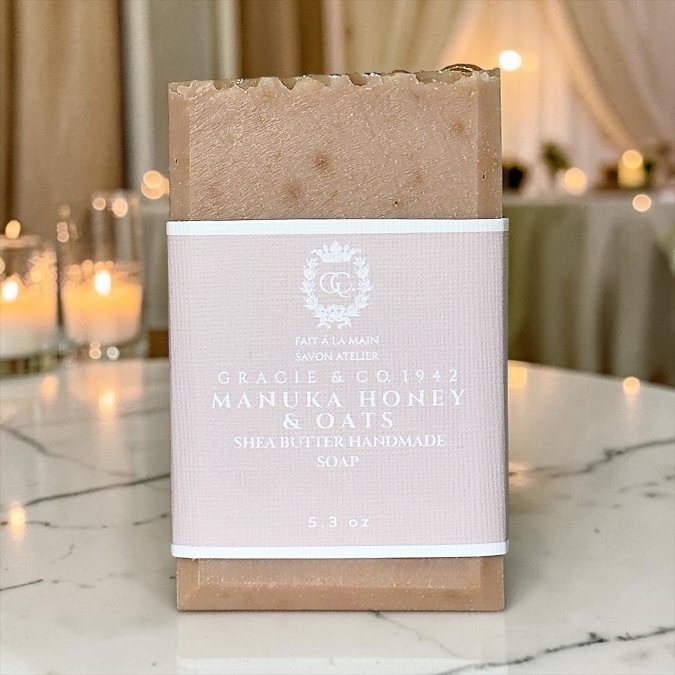
Most people shop for soap by scent. That's the fun part, and I get it. But scent won't tell you whether a bar will leave your skin tight or soft. The label will.
What to Look for When You Shop for Soap
When you shop for soap, look for three things: a short ingredient list you can pronounce, no sulfates or parabens, and a format that fits how you bathe. Everything else is preference.
Sulfates are the harsh cleansers that make big bubbles but can strip skin. Parabens are preservatives we choose not to use. Neither belongs in a bar you use every day.
Read the Label, Not the Marketing
Words like "pure" and "gentle" aren't regulated on soap packaging, so they don't tell you much. The ingredient list does. Look for plant oils, butters, and milks near the top.
Fragrance is the other big one. A bar can say "natural" and still use synthetic fragrance. If your skin is sensitive, check whether the scent comes from essential oils or fragrance oils. We wrote a full breakdown on fragrance oils versus essential oils if you want the details. Our PURE collection uses essential oils; our Signature bars use phthalate-free fragrance oils.
Once you know what to check, you can browse our sulfate-free shea butter soap bars and compare labels side by side.
A Simple Price and Value Breakdown
Here's the honest way to compare value: look at cost per use, not sticker price. A bar that costs more upfront but lasts three times as long is the better buy.
A few things drive that math:
- Bar size. Our everyday shea butter soap bars are about 5 oz. Our Signature bars are 7 oz, hand-piped one at a time. Bigger bars last longer, but only if you keep them dry.
- Cure and density. Cold process bars cured for weeks are harder and dissolve slower than mass-market bars that are milled and pressed quickly. A dense bar gives you more washes per ounce.
- Fillers. Some drugstore bars use fillers that wash away fast. You pay less at the register but replace the bar sooner.
- Water content. Liquid soap is often diluted with water, so you use more per wash. A bar is concentrated soap.
A simple way to test this at home: weigh your bar on a kitchen scale before you start, then weigh it again after two weeks of daily showers. Divide the starting weight by the number of showers to get ounces per use. Do that with two bars and you'll see the real difference fast.
What You're Comparing |
Typical Drugstore Bar |
Our Shea Butter Soap |
|---|---|---|
Bar size |
Often smaller |
About 5 oz everyday, 7 oz Signature |
Ingredients |
Fillers common |
Shea butter, coconut milk, kaolin clay |
Cure |
Fast, minimal |
Cured for weeks |
Scent source |
Often synthetic |
Essential oils (PURE) or phthalate-free fragrance oils (Signature) |
How long it lasts |
Shorter |
Longer with proper care |
That last row matters more than people think. A bar that lasts twice as long isn't really twice the price. It's the same price spread over more showers.
Natural Bar Soap Ingredients That Actually Help
Three ingredients do most of the work in a good natural bar soap: shea butter, coconut milk, and a gentle clay. Here's what each one actually does.
- Shea butter helps skin hold on to moisture, so you don't feel tight after you rinse.
- Coconut milk makes a rich, creamy lather that feels soft instead of soapy.
- Kaolin clay is the gentlest clay. It gives a silky feel and helps lift away dirt and oil without over-drying.
Every bar we make has all three. That’s not a gimmick. It’s the base of every bar, made by hand in small batches.
What Cold Process Soap Means for You
Cold process soap is made by mixing oils and lye at low heat, then letting the bars cure for weeks. Curing removes extra water and makes a harder, longer-lasting bar.
Sea Salt Agave Shea Butter Soap with Coconut Milk – 5.3 oz →
Why should you care as a shopper? Because the method tells you a lot about what you're buying. Here's how the main methods compare.
- Cold process. Oils and lye are mixed at low heat, poured into molds, and cured for weeks. The slow cure makes a dense bar that lasts. It's slower to make, which is part of why handcrafted soap costs more. Every bar we make is cold process.
- Hot process. The same basic chemistry, but heat speeds up the reaction so the soap is usable sooner. Bars tend to be softer and more rustic-looking. It's a fine method, just different.
- Melt and pour. A pre-made soap base is melted, colored, and poured. It's fast and easy, but the base is made elsewhere, so the maker controls less of what's in the bar.
- Mass-market milling. Large manufacturers make soap, dry it into flakes, and mill it with fillers and fragrance. It's cheap and consistent, but the bar is often harder and less creamy.
So when you shop, the method question is really: who made this, and how much time went into it? A cold process bar takes weeks before it's ready. That time is why it feels different in the shower.
If you want to see what cold process looks like in practice, our everyday shea butter soap bars are a good place to start.
The Best Natural Soap for Dry Skin
The best natural soap for dry skin is one built on shea butter and coconut milk, with no sulfates, and scented gently or not at all. Dry skin doesn't need more scrubbing. It needs a bar that cleans without stripping.
If you live somewhere dry, you know the feeling. Our desert air here pulls moisture out fast. A harsh bar makes it worse. That's why we load our bars with shea butter and skip sulfates entirely.
If your skin still feels dry after switching, it may not be the soap alone. A doctor can help you sort out what's going on.
Handmade Soap for Dry Skin: Bar vs. Liquid
Handmade soap for dry skin usually works best as a bar, because bar soap skips the water and preservatives that liquid formulas need. But liquid has its place.
- Bar soap: longer-lasting, less packaging, easy to travel with.
- Liquid soap: convenient for pumps and shared sinks, but often diluted with water.
For most dry-skin routines, a bar wins. You get more actual soap per ounce and fewer ingredients overall.
Making Your Bar Last Longer
A handmade bar lasts longer if you keep it dry between uses. Use a draining soap dish, don't leave it sitting in water, and let it air out. A bar that stays wet dissolves fast, no matter how well it's made. For the full guide, read why handcrafted soap lasts longer, and if you're curious why some natural soaps dry skin out, we cover that too.
Our Tip
Keep it simple. Start with one lightly scented shea butter soap and use it for a week before you buy more. Your skin will tell you what it likes. If you want to stock up, our everyday shea butter soap bars are a good place to start, and you can mix and match scents. And if you'd rather try a few things at once, our Signature Handmade Artisan Soap and Gift Sets make it easy to sample a range of scents and bar types.
We're grateful you're here, and we hope this makes your next soap run a little easier.
A little about us: I'm Gracie, a third-generation soap maker. My grandmother started our family's soap making, and I'm proud to carry it on. We're a small, faith-centered family business in Waddell, Arizona, and we make everything by hand in small batches.
Frequently Asked Questions
What should I look for when shopping for soap?
Start with the ingredients list, not the front label. Look for natural bar soap ingredients like shea butter, coconut milk, and plant-based oils near the top. Check that it's sulfate-free and paraben-free. If you have dry skin, look for shea butter and coconut milk, which help skin hold moisture and create a creamy lather. Also check the bar size and how it was made. Cold process soap is cured for weeks, which makes a harder, longer-lasting bar. When you shop for soap this way, you get a bar that fits your skin instead of just a pretty wrapper.
Is bar soap a good choice for dry skin?
It can be, if you pick the right bar. The best natural soap for dry skin is one made with shea butter and coconut milk and no sulfates, since sulfates can strip your skin's natural oils. Our handmade soap for dry skin uses shea butter to help skin hold on to moisture, coconut milk for a rich, creamy lather, and kaolin clay for a silky feel. In dry desert air, that matters. Avoid bars with harsh detergents, and always let your bar dry between uses so it lasts. If dryness is severe or painful, check with your doctor.
How long does a handmade soap bar last?
It depends on how you store it. A cold process soap bar cured for weeks is harder and lasts longer than a cheap bar that dissolves fast. Keep it on a draining soap dish so water runs off, and keep it away from the direct stream of the shower. Our everyday bars are about 5 oz, and our Signature bars are 7 oz. With proper drying between uses, a bar can last several weeks for one person. Rotating two bars also helps each one dry fully, which makes them last longer.
Why does handcrafted soap cost more than drugstore soap?
You're paying for ingredients and time. Our bars are made in small batches by hand, cured for weeks, and made with shea butter, coconut milk, and kaolin clay instead of cheap fillers. Our everyday bars are $10.00. That works out to a few cents per wash when a bar lasts several weeks. Drugstore bars are often mass-produced with detergents that can leave skin feeling tight. When you shop for soap, compare ingredients and bar size, not just the sticker price. Value is about how well a bar treats your skin and how long it lasts.