

How to Stop Soap From Dissolving: 7 Proven Methods

Table of Contents
- Why Your Soap Dissolves So Quickly
- Why Does Handmade Soap Melt Faster Than Commercial Bars
- Step 1: Choose the Best Soap Dish for Natural Soap
- Step 2: Maximize Air Circulation Around Your Bar
- Step 3: Store Your Soap Away From Standing Water
- Natural Soap Care Tips for Extended Shelf Life
- Soap Saver Bags and Accessories That Extend Bar Life
- Frequently Asked Questions
Last Updated: September 24, 2026
Why Your Soap Dissolves So Quickly
Bar soap melts faster than most people expect. The culprit isn't always poor quality, it's usually how the soap interacts with water and air. Natural soaps, especially handcrafted bars made with nourishing oils like shea butter and olive oil, are particularly prone to dissolving quickly because they contain glycerin and other water-soluble compounds that attract moisture.
At Gracie & Co. 1942, we offer premium handcrafted bath and body products rooted in over 60 years of family tradition, designed to promote healthier, more radiant skin. The real challenge is understanding the science behind why soap dissolves, then using practical storage and care techniques to extend shelf life. Most people think the problem is the soap itself. Often, it's the environment.
Temperature, humidity, and water exposure all play major roles. A bar sitting in standing water will disintegrate within days. The same bar stored properly can last weeks longer. This guide covers seven proven methods to stop soap from dissolving, starting with the most important factor: your soap dish.
Why Does Handmade Soap Melt Faster Than Commercial Bars
Handmade soap melts faster because it's made differently than mass-produced alternatives. Commercial soaps often contain synthetic hardeners and preservatives that extend shelf life but reduce skin benefits. Natural handcrafted bars prioritize skin nourishment over longevity.
Here's the difference:
Handmade soap contains:
- Real oils (olive, coconut, shea butter)
- Glycerin (a natural byproduct of saponification)
- No synthetic hardeners
- Higher water content during curing
Commercial soap typically contains:
- Detergent compounds instead of true soap
- Sodium lactate or other hardening agents
- Preservatives and stabilizers
- Lower moisture content
The glycerin in natural soap is what makes it so good for your skin, but it also attracts water like a magnet (Checking your browser). When glycerin encounters moisture in the air or on your shower surface, it pulls that water into the soap, causing it to soften and dissolve faster.
This isn't a flaw. It's a trade-off. You're choosing genuine skin care over maximum durability. Understanding this helps you make smarter storage decisions.
Step 1: Choose the Best Soap Dish for Natural Soap
The best soap dish for natural soap does one thing above all else: drains water away from the bar. This is the single most important factor in preventing dissolution.
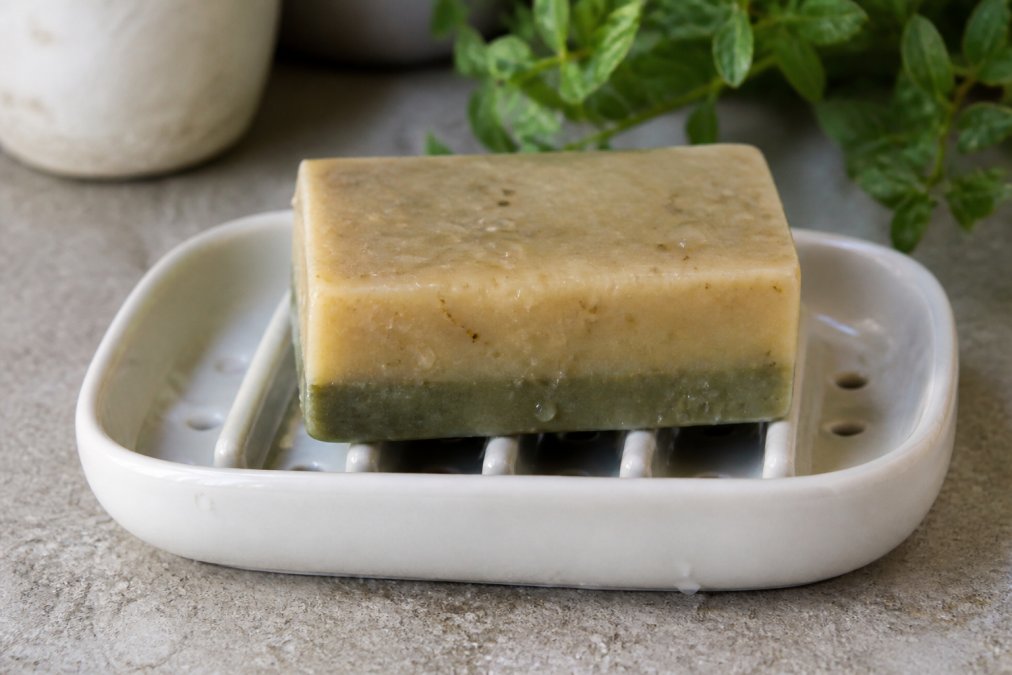
A good soap dish has:
- Drainage holes or slats on the bottom
- Elevation that allows air to flow underneath
- A sloped surface so water runs off, not pools
- Material that doesn't absorb moisture
Ceramic, stainless steel, and bamboo are excellent choices. Avoid solid plastic dishes or anything that traps water underneath.
Material Science: Why Drainage Matters
Drainage prevents the soap from sitting in its own dissolved residue. When water pools around the bar, it creates a film of soapy liquid that accelerates dissolution. The soap literally dissolves into this water, and then the water has nowhere to go.
A well-draining dish solves this in two ways:
- Water flows away instead of collecting
- Air circulates underneath, helping the bar dry between uses
Magnetic Soap Holders as an Alternative
Magnetic soap holders offer a completely different approach: they suspend the bar in air, eliminating surface contact entirely. The soap hangs from a magnetic mount, exposed to air on all sides.
Advantages:
- Maximum air circulation
- No water pooling
- Extends bar life significantly
- Works in any climate
Drawbacks:
- Requires a metal stud or mounting surface
- Bar must contain metal particles (not all natural soaps do)
- Harder to use in certain shower configurations
Step 2: Maximize Air Circulation Around Your Bar
Air circulation is your second line of defense. Stagnant, humid air causes soap to absorb moisture and soften. Moving air helps the bar dry completely between uses.
Improve air circulation by:
NUTRIENT FOCUS Solid Shampoo Bar - 6 →
- Positioning the soap dish away from direct water spray, place it on a shelf or caddy, not directly under the showerhead
- Opening bathroom windows or doors after showers to let humid air escape
- Using a bathroom fan during and 15-20 minutes after showering
- Spacing multiple bars apart if you keep several in the bathroom, don't stack them
- Rotating the bar daily so all sides dry evenly
Step 3: Store Your Soap Away From Standing Water
Never leave your soap sitting in water. This seems obvious, but it's the most common mistake. A bar left in a tub of water, on a wet sink, or in a shower caddy with pooled water will disintegrate within days.
Where to store soap between uses:
- On a well-draining dish in a dry area of the bathroom
- On a shelf above the sink or tub (not beside it)
- In a soap saver bag (covered in detail below)
- In a bedroom, guest room, or other dry room
- In a travel tin if you're on the go
What to avoid:
- Soap dishes with solid bottoms
- Shower caddies that collect water
- Windowsills where rain or condensation collects
- Closed containers that trap moisture
- Anywhere water pools or drips regularly
Natural Soap Care Tips for Extended Shelf Life
Beyond storage, several care practices extend how long your bar lasts. These habits are especially important for handcrafted soaps made with premium oils.
Climate and Humidity Impact on Soap Preservation
Where you live affects how quickly soap dissolves. High humidity accelerates the process dramatically. A bar that lasts four weeks in a dry climate might dissolve in two weeks in a humid one.
Humid climates (coastal areas, tropical regions, or very rainy seasons):
- Use magnetic soap holders or soap saver bags
- Rotate bars more frequently
- Store backup bars in a cool, dry closet
- Consider moving soap to a bedroom between uses
- Expect shorter shelf life even with perfect storage
Dry climates:
- Standard soap dishes work well
- Bars last longer naturally
- Less frequent rotation needed
- Air circulation is still important but less critical
Water Hardness and How It Affects Your Bar
Hard water, water with high mineral content, affects how soap behaves. Hard water reduces the soap's cleaning ability and can make it feel slimy or leave residue on skin (Hardness of Water).
Signs of hard water:
- Soap scum buildup in the tub or on the bar
- Slimy feeling after washing
- Dull, lifeless hair after shampooing
- Spots on glassware or shower doors
If you have hard water, try:
- Rinsing the soap bar with distilled water instead of tap water
- Using a vinegar rinse after washing (dilute vinegar in water)
- Storing the bar in a soap saver bag to reduce direct water contact
- Choosing soaps with added sodium lactate, which helps in hard water
Soap Saver Bags and Accessories That Extend Bar Life
Soap saver bags are mesh or fabric pouches designed to hold soap while you wash. They serve multiple purposes: they exfoliate skin, extend bar life, and prevent soap slivers from going to waste.
How soap saver bags work:
- The mesh allows water and lather to pass through
- The fabric holds the bar securely
- You wash directly through the bag
- The bag hangs to dry between uses
- The soap bar lasts 2-3 times longer
Why they extend shelf life:
- The bar stays mostly dry between uses
- Air circulates through the mesh
- You're not repeatedly handling a wet bar
- Water drains away instead of pooling
Soap saver bags are especially useful for:
- Handcrafted soaps with short shelf life
- People with very humid bathrooms
- Households that shower daily
- Anyone who wants maximum value from premium bars
Other accessories that help:
- Soap lifts: Small suction-cup shelves that hold the bar above water
- Soap dishes with removable inserts: Allow easy cleaning and air flow
- Bamboo soap racks: Natural material that resists moisture
- Travel soap containers: Airtight tins for storing bars between uses
Frequently Asked Questions
Why does handmade soap dissolve faster than commercial bar soap?
Handmade soap, especially natural varieties like those from Gracie & Co. 1942, contains higher levels of glycerin and natural oils such as olive oil and shea butter. These ingredients absorb water more readily than the synthetic hardeners found in commercial bars. Additionally, handmade soaps typically use pure saponification processes without the stabilizers that extend shelf life in mass-produced alternatives. This makes them more susceptible to dissolving when exposed to moisture and water streams.
Does a soap saver bag really help stop soap from dissolving?
Yes. Soap saver bags reduce direct water contact by allowing water to drain while keeping the bar contained. They're particularly effective for preventing soap slime buildup and extending bar life. The mesh material promotes air circulation while catching soap residue and slivers, making cleanup easier. For natural soaps with higher glycerin content, using a soap saver bag in the shower is one of the most practical solutions to prevent rapid dissolution.
What's the best way to store bar soap to keep it dry between uses?
Store your bar soap in a well-draining soap dish placed away from direct water spray. Position it where air can circulate freely around all sides. In humid climates or bathrooms with poor ventilation, consider storing a backup bar in a dry closet or linen cabinet to extend its lifecycle. Allow the bar to cure and dry completely between uses, this is especially important for handmade soaps. Avoid storing soap in sealed containers or on surfaces that trap moisture, as this accelerates disintegration.
How does water hardness affect how quickly soap dissolves?
Hard water contains dissolved minerals like calcium and magnesium that interact with soap molecules, creating soap residue and reducing the bar's structural integrity. In areas with high water hardness, bars may break down faster. Testing your water hardness can help you adjust storage methods, for example, using a soap saver bag becomes even more critical in hard water areas to minimize contact and prevent premature dissolution.