

Organic Soap for Daily Use: 2026 Buyer's Guide

Table of Contents
- Quick Comparison: Organic Soap Bars for Daily Use
- 1. Sea Salt Agave Shea Butter Soap: Best for Gentle Exfoliation
- 2. Manuka Honey Oats & Coconut Milk Shea Butter Soap: Best for Sensitive Skin
- 3. Eucalyptus Peppermint Shea Butter Soap: Best for Morning Refresh
- 4. Champagne Kisses Shea Butter Soap: Best for a Luxurious Daily Ritual
- 5. Calm. Nourish. Restore Lavender Oats & Sea Moss Soap: Best for Evening Wind-Down
- 6. Orange Patchouli Soap Bar: Best for Citrus and Earthy Scent Lovers
- 7. MEN'S COLLECTION Tobacco Caramel Premium Coconut Milk Soap: Best for a Bold, Warm Scent
- How to Choose Organic Soap
- How Long Do Organic Soap Bars Last?
- Frequently Asked Questions
Last Updated: September 13, 2026
Quick Comparison: Organic Soap Bars for Daily Use
The best organic soap for daily use depends on your skin type and scent preference, not the loudest label. Gracie & Co. 1942 has handcrafted soap in small batches for over 60 years of family tradition, and that experience shapes our test: a daily bar must clean without stripping, hold its shape, and smell good.
A true handcrafted soap is a cold-processed bar made from plant oils and butters that retain natural glycerin, free of sulfates, parabens, and synthetic fillers. Most commercial bars strip glycerin and rebuild with surfactants.
| Bar | Best For | Size | Price |
|---|---|---|---|
| Sea Salt Agave Shea Butter | Gentle exfoliation | 5.3 oz | $12.00 |
| Manuka Honey Oats & Coconut Milk | Sensitive skin | 7 oz | $15.00 |
| Eucalyptus Peppermint Shea Butter | Morning refresh | 5.3 oz | $12.00 |
| Champagne Kisses Shea Butter | Luxurious daily ritual | 7 oz | $15.00 |
| Calm. Nourish. Restore Lavender Oats & Sea Moss | Evening wind-down | 5.3 oz | $12.00 |
| Orange Patchouli | Citrus and earthy scent lovers | 5 oz | $12.00 |
| Men's Collection Tobacco Caramel | Bold, warm scent | 5 oz | $11.00 |
How We Evaluated These Bars
Our handcrafted bars are made with intention, purpose, and the highest quality care for our customers. That slow cure leaves glycerin in the bar, a natural humectant that pulls moisture toward skin.

American Academy of Dermatology guidance on bathing and skin care
1. Sea Salt Agave Shea Butter Soap: Best for Gentle Exfoliation
Sea salt and agave nectar give this bar its coastal character, and fine salt minerals exfoliate without scratching. Shea butter carries moisture, so you get a buffed, hydrated finish instead of the tight feeling cheap scrubs leave.

It suits all skin types and works well in a morning shower. The scent runs crisp ocean breeze, sweet agave and light citrus, then warm driftwood.
Pros: mineral-rich exfoliation, deep hydration from shea butter, vegan and cruelty-free Cons: salt bars need a draining dish, or they soften faster than you'd like
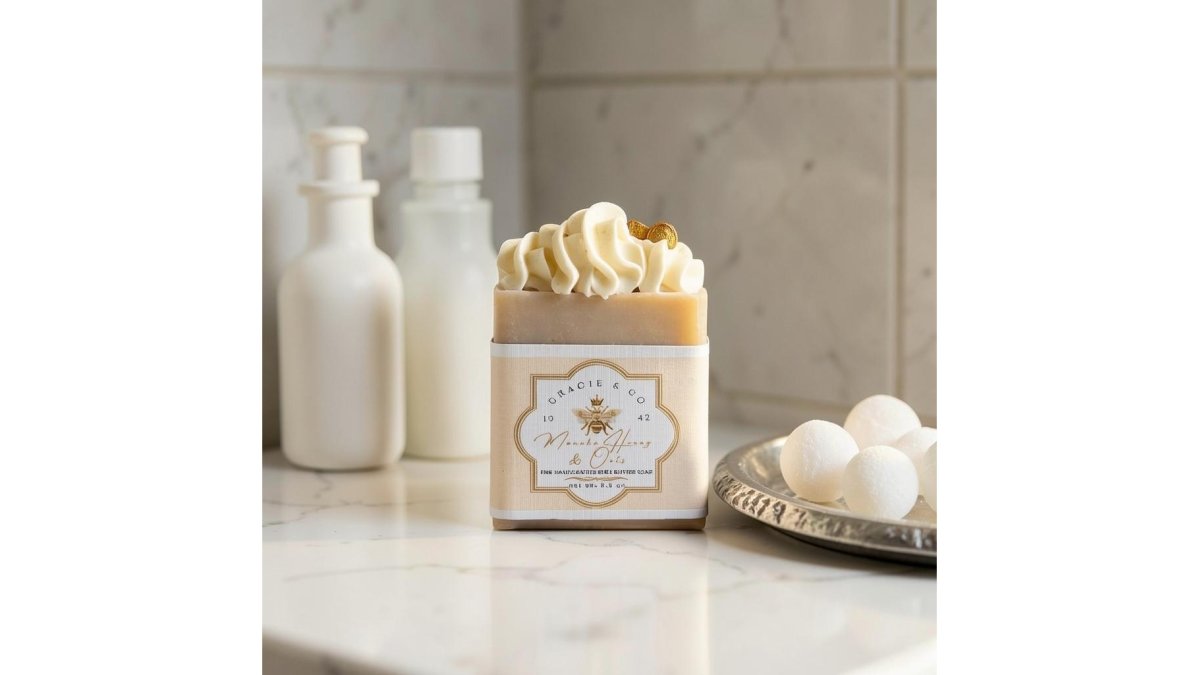
2. Manuka Honey Oats & Coconut Milk Shea Butter Soap: Best for Sensitive Skin
If your skin reacts to nearly everything, start here. Finely ground oats buff away dead cells without irritation, while manuka honey, coconut milk, and shea butter calm redness and support the lipid barrier. It cleanses without stripping, the point of choosing organic soap for reactive skin.

Pros: genuinely gentle exfoliation, soothing for irritation, generous 7 oz bar Cons: the oat texture is noticeable, which some people dislike on the face
3. Eucalyptus Peppermint Shea Butter Soap: Best for Morning Refresh
Eucalyptus and peppermint deliver a cool, invigorating hit that makes a 6 a.m. shower feel intentional. The lather is rich and creamy, and shea butter keeps the finish soft.
Post-workout, this is the bar that resets you, and it's the most popular pick in the lineup.
4. Champagne Kisses Shea Butter Soap: Best for a Luxurious Daily Ritual
Champagne notes, peach, and cherry blossom open this bar, with jasmine, lilac, and warm white wood underneath. Customers call it a small celebration, and it holds scent on skin longer than most.
The 7 oz size offers a luxurious experience, and the shea butter formula suits dry skin that needs moisture, not just a wash.
Pros: long-lasting fragrance, deeply moisturizing, gift-worthy presentation Cons: the floral profile is assertive, so it isn't a neutral everyday scent
5. Calm. Nourish. Restore Lavender Oats & Sea Moss Soap: Best for Evening Wind-Down
Bulgarian lavender essential oil does the aromatherapy work here. Colloidal oats soothe, and sea moss brings barrier-supporting minerals. The lather is thick and bubbly, and the bar is designed to last.
6. Orange Patchouli Soap Bar: Best for Citrus and Earthy Scent Lovers
Bright orange lifts this bar and patchouli grounds it, a combination that sounds odd until you use it. The lather stays creamy, and skin finishes soft rather than coated.
It's an easy everyday bar for a guest bathroom or gift, and suits anyone who finds straight floral or citrus too one-note.
Pros: balanced citrus-earthy profile, gentle enough for daily face and body use Cons: patchouli is polarizing, so sample before committing to a multi-bar order
7. MEN'S COLLECTION Tobacco Caramel Premium Coconut Milk Soap: Best for a Bold, Warm Scent
Earthy tobacco leaf and sweet caramel sit over smoky woods and amber, while coconut milk and olive oil keep the cleanse from drying you out. It's a gourmet scent, not a conventional "men's soap" aroma.
At 5 oz it's the most affordable bar in the collection, an easy first purchase or gift.
Pros: distinctive warm scent, hydrating coconut milk base, lowest price in the lineup Cons: the sweetness won't suit anyone who wants a purely smoky profile
How to Choose Organic Soap
Choosing natural soap comes down to four checks: scan for sulfates and synthetic fillers, confirm that glycerin remains, match the oil base to your skin type, and check whether scent comes from essential oils or fragrance oils.
How to choose organic soap, step by step:
- Scan the first five ingredients for olive oil, coconut oil, shea butter, or castor oil
- Reject any bar listing sodium lauryl sulfate or sodium laureth sulfate
- Confirm that glycerin remains in the bar, not just "natural"
- Match the bar to your skin: oats and honey for sensitive, salt for texture, shea for dryness
- Check the scent source, favoring essential oils over fragrance oils if you react easily
- Buy one bar first, then commit to a multi-bar order once your skin agrees
The pH Question Most Buyers Never Ask
True soap, fat meeting lye, is inherently alkaline, landing around pH 9 to 10 once saponified and cured. That's the chemistry of saponification, not a flaw. What separates a well-made handcrafted bar from a harsh one is how much it disrupts your skin's acid mantle, which sits at roughly pH 4.5 to 5.5 (peer-reviewed research).
A handcrafted bar with retained glycerin and high olive oil rinses cleanly and lets skin rebound to its natural pH within about 20 to 30 minutes. A sulfate detergent bar pushes the barrier further out of balance and leaves it there longer, the tight, itchy feeling people call "clean." To test a bar, look for glycerin listed as retained (not added back) and olive or another mild oil leading, rather than coconut alone.
Match the Base Oil to Your Skin, Not the Scent
Scent sells the bar; the base oil decides whether you can use it every day.
- Olive-dominant bars are the mildest and best for daily face and body use, especially on normal to dry skin.
- Coconut-dominant bars lather big and clean deep, but the lauric acid that makes them bubbly also makes them the most likely to dry you out. Fine for oily skin and summer; risky for reactive skin in winter.
- Shea and other butters soften the finish and slow the cleanse, which suits dry or mature skin.
- Castor oil in small amounts boosts lather stability without stripping, you will usually see it listed fourth or fifth, not first.
Hard Water Changes Everything
With hard water, expect less lather from any true organic bar. That's chemistry, not a defect: calcium and magnesium bind with soap molecules to form insoluble scum, killing foam and leaving film on skin and tile. It's still cleaning, just without the synthetic-style suds of detergent body wash.
Two fixes: lather in your hands under running water rather than rubbing the bar on your skin, and rinse longer than feels necessary. With very hard water, a shower filter or periodic vinegar rinse helps more than switching bars.
U.S. Geological Survey information on water hardness
The Benefits of Olive Oil in Skincare
Olive oil is the backbone of traditional soap making for a reason. Rich in oleic acid and natural squalene, emollients that soften skin and hold moisture, it produces a mild, low-irritation bar suited to daily face and body use.
The benefits of olive oil in skincare go beyond moisture: olive oil soap is gentler on the skin microbiome than detergent cleansers because it doesn't strip the acid mantle the way sulfates do. Olive oil is a key ingredient in our collection, contributing to how these bars behave.
How Long Do Organic Soap Bars Last?
A well-made organic bar lasts roughly four to six weeks of daily shower use when kept dry between washes. Size matters, so a 7 oz bar outlasts a 5 oz bar by a meaningful margin, and how you store it matters as much as what you bought.
Three habits extend bar life:
- Use a draining soap dish so water runs off instead of pooling underneath
- Keep the bar away from the direct shower spray
- Cut larger bars in half and rotate them, so only one piece is exposed to water at a time
Shelf Life, Rancidity, and Natural Aging
This is the question most organic-soap guides skip, and the one that worries buyers most: does an organic bar go bad?
Unopened, a handcrafted bar made with olive oil, coconut oil, and shea butter holds up well for about 12 to 18 months when stored in a cool, dry cabinet away from humidity and direct sun. The oils are shelf-stable to begin with, and saponification acts as a mild preservative. There is no water left in a properly cured bar for bacteria to grow in, which is why true soap does not need the preservatives a liquid body wash does.
What you will see over time is natural aging, not spoilage. A bar that sits for months continues to cure and harden, loses a little scent throw, and often lasts longer in the shower than a fresh one.
Rancidity is different, and it is worth knowing how to spot it:
- A faint orange or yellow tint spreading across the bar, early oxidation of the oils
- A sharp, crayon-like or waxy smell replacing the original scent
- A tacky, sweating surface that does not dry down after a few minutes in open air
If you see all three together, the bar has turned. A single soft spot or a slightly faded scent is normal aging and the bar is still fine to use. To slow oxidation, keep bars wrapped or boxed rather than exposed on a shelf, and avoid storing them above a stove, washer, or anywhere that swings between humid and dry.
Cost Per Wash: The Honest Math
Most articles list a bar price and stop. The useful number is cost per shower.
A $12 to $15 bar can offer a lasting experience. The gap in cost per wash between handcrafted bars and conventional options is often smaller than the sticker price makes it look.
The gap is smaller than the sticker price makes it look. What you are actually paying for with a handcrafted bar is fewer ingredients, retained glycerin, and a formula that does not rely on sulfates.
Storage That Actually Works
For unopened bars, keep them in a cool, dry cabinet away from humidity. Cold-processed bars continue to cure and harden over time, so a bar that sits for a few months often lasts longer in the shower than one used immediately.
For the bar in rotation, the draining dish is non-negotiable. A bar left sitting in a puddle of water can lose a week of life in a single day, because the surface stays soft and dissolves faster than the cured interior. If you share a shower, rotate two bars rather than leaving one under the spray all week.
Frequently Asked Questions
What is the best soap for everyday use?
The best soap for everyday use depends on your skin type. For most people, a bar made with olive oil and shea butter provides a gentle cleanse without stripping natural oils. If your skin is sensitive, look for soothing ingredients like oats, coconut milk, or manuka honey. Gracie & Co. 1942's Manuka Honey Oats & Coconut Milk Shea Butter Soap is a strong option for daily use on sensitive skin.
How do I know if my soap is truly organic?
Check the ingredient list for recognizable plant-based oils like organic olive oil, coconut oil, and shea butter. Avoid bars listing synthetic fragrances, parabens, sulfates, or fillers. Look for terms like 'organic' and 'non-toxic' on the packaging, and be wary of vague claims without a full ingredient breakdown. A transparent label is the clearest sign that a soap is genuinely organic.
Is organic soap better for sensitive skin?
Organic soap is often better for sensitive skin because it skips harsh surfactants and synthetic fragrances that can trigger irritation. Bars made with colloidal oats, shea butter, and coconut milk help soothe and moisturize while supporting the skin barrier. Gracie & Co. 1942's Manuka Honey Oats & Coconut Milk Shea Butter Soap is formulated with sensitive skin in mind, using gentle exfoliants and moisturizing ingredients.
What ingredients should I avoid in daily bar soap?
Avoid bars containing sulfates, parabens, phthalates, synthetic fillers, and artificial fragrances. These can strip skin of natural oils, disrupt the skin microbiome, and cause irritation over time. Instead, look for olive oil, shea butter, coconut oil, glycerin, and botanical extracts. A short, readable ingredient list with no chemical-sounding names is a good sign.
How long does a bar of organic soap last?
A well-made organic soap bar typically lasts three to four weeks with daily use when stored properly. Keeping the bar on a draining soap dish and away from standing water helps it last longer. Harder bars with olive oil and shea butter tend to outlast softer, glycerin-rich bars. Gracie & Co. 1942's bars are hand-cut and dense, designed to hold up to regular use.