7 Steps to a Gentle DIY Body Wash for Sensitive Skin

Table of Contents
- Why Sensitive Skin Needs a Gentler Wash
- What to Look For in a Homemade Body Wash for Sensitive Skin
- Gathering Your Ingredients and Tools
- Step-by-Step: Making a Basic DIY Fragrance-Free Body Wash
- Adding Essential Oils Safely for Sensitive Skin
- How to Store Homemade Body Wash So It Stays Fresh
- Your Next Step: Try a Gentle Bar Before You Mix
- Frequently Asked Questions
Last Updated: October 29, 2026
Why Sensitive Skin Needs a Gentler Wash
If your skin stings, tightens or turns red after a shower, you are not alone. Many people with sensitive skin find that regular body wash is simply too harsh. That is why I started making my own gentle options, including a sensitive skin body wash I can feel good about.
Sensitive skin can lose moisture more easily and react to strong cleansers. A gentle body wash cleans without stripping away what your skin needs.
Here in Arizona, the dry desert air makes this even harder. Our skin can feel tight by the end of the day, especially in the winter. A soft, sulfate-free wash helps a lot.
What to Look For in a Homemade Body Wash for Sensitive Skin
When you make your own body wash, the ingredients matter most. Here is what I look for:
- Mild cleansers. Avoid harsh sulfates, which can strip oil from your skin.
- Moisturizing oils. Shea butter and coconut oil help your skin hold on to moisture.
- Gentle clays. Kaolin clay cleans softly and leaves a silky feel.
- Fragrance-free or lightly scented. Simple is often safer for sensitive skin.
Watch out: Any new ingredient can cause a reaction. Always do a small patch test on your inner arm before using a new recipe all over your body.
Gathering Your Ingredients and Tools
You do not need fancy equipment to get started. Keep your setup simple and clean.
- A clean glass jar with a tight lid
- A measuring cup and spoons
- A small whisk or spoon for mixing
- Your chosen gentle ingredients
Wash your tools well before you start. Clean hands and clean supplies help keep your wash fresh for longer.
Step-by-Step: Making a Basic DIY Fragrance-Free Body Wash
Here is an easy way to make a basic wash. Go slowly, and take your time.
- Measure your liquid base into a clean bowl.
- Add your moisturizing oil and mix gently.
- Stir in a small amount of gentle clay until smooth.
- Pour the mixture into your clean glass jar.
- Seal the lid and label the jar with the date.
Use a small amount at a time. A little goes a long way, and you can always add more.
Here is a quick look at the basic steps so you can follow along.
| Step | What to do | Time or frequency |
|---|---|---|
| 1 | Measure your liquid base into a clean bowl | Before you start |
| 2 | Add your moisturizing oil and mix gently | Mix gently |
| 3 | Stir in a small amount of gentle clay until smooth | Until smooth |
| 4 | Pour the mixture into your clean glass jar | After mixing |
| 5 | Seal the lid and label the jar with the date | Right after pouring |
Adding Essential Oils Safely for Sensitive Skin
Essential oils are strong. A single drop of some oils carries a lot of plant compounds, and on sensitive skin that can mean redness, itching or a burning feeling. I love a lightly scented wash, but I treat essential oils with respect.
Dilute, and know your number. Essential oils should never go on skin neat. Use only a small amount of essential oil, and measure with a dropper rather than by eye.
If you are pregnant, nursing or have a skin condition, check with your doctor before using any essential oil.
Do a real patch test. A quick dab is not enough. Here is the protocol I use:
- Mix your finished wash exactly as you plan to use it.
- Put a small amount on the inside of your forearm, about the size of a coin.
- Leave it on for 24 hours without washing it off.
- Check the spot at 24 and again at 48 hours.
- Look for redness, swelling, itching, burning or a rash.
- If nothing happens, test a larger area, like your upper arm, before using it all over.
If you react at any step, stop and rinse with cool water. If the reaction does not settle, see a doctor.
One more honest note: our PURE collection uses essential oils, and our Signature soaps use fragrance oils that are phthalate-free. Neither is automatically gentler than the other. What matters is the amount and how your own skin responds. That is why I always say test first, and go slow.
How to Store Homemade Body Wash So It Stays Fresh
Here is what actually matters.
Keep it clean and keep it cool.
-
Store your jar in a cool, dark cabinet, not on the shower ledge where steam and heat build up.
Glass Jar 2-in-1 Whipped Shea Butter Body Wash & Shaving Cream, 11 Scents →
-
Scoop with a clean spoon or a pump, never wet fingers.
-
Keep the lid closed between uses.
-
Make small batches you can finish in two to four weeks.
-
Label the jar with the date you made it and the date you added any preservative.
-
A sour, yeasty or off smell
-
A change in color, or dark specks that were not there before
-
Fuzz, film or bubbles on the surface
-
A suddenly thinner or separated texture
-
Any stinging when you use it
If you want something you do not have to think about, our whipped shea butter body wash and shaving cream in a glass jar is made in small batches and sulfate-free, and our shea butter soap bars are cured for weeks before they ever reach you. That curing time is part of why a bar stays fresh so long.

Your Next Step: Try a Gentle Bar Before You Mix
Making your own wash takes time, and some people prefer something ready to use. If you want a gentle option right away, you can try our whipped shea butter body wash and shaving cream in a glass jar. It is sulfate-free and comes in 11 scents, and it is made by hand in small batches.
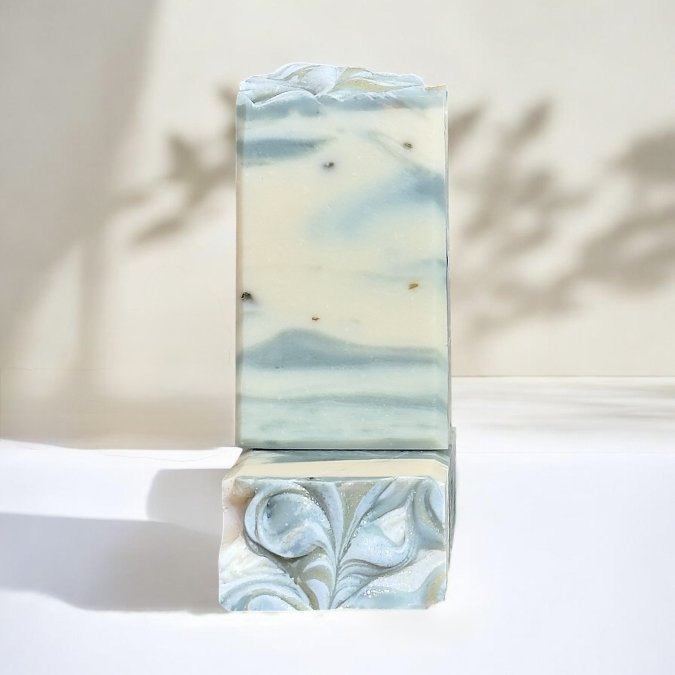
Our bars are also a great place to start. Every soap has shea butter, coconut milk and kaolin clay, and they are sulfate-free and made by hand.
Our Tip: Start with a patch test, go slow with new ingredients, and keep your wash cool and closed. Your skin will tell you what works.
Thanks for reading. I hope this helps you find a gentle wash your skin loves. Come see what we're making at our shop whenever you're ready.
Frequently Asked Questions
How do you make natural body wash for sensitive skin?
Start with a mild liquid base and a few gentle ingredients that feel soft on your skin. Warm the base slightly, stir in a little glycerin or aloe for moisture, and skip heavy fragrance. Test a small amount on your inner arm for a day before using it all over. Mix only what you can use within a few weeks, and keep it in a clean, labeled bottle. If your skin still reacts, the issue may be a specific ingredient rather than the recipe itself, so change one thing at a time.
What ingredients should you avoid in body wash if you have sensitive skin?
Many people with sensitive skin do best without strong sulfates, which can strip natural oils, and without heavy synthetic fragrance, which is a common source of irritation. Harsh scrubbing grains and high amounts of essential oil can also bother sensitive skin. Read every label and start with the simplest recipe you can. Our shea butter soap is sulfate-free, and our Whipped Shea Butter Body Wash & Shaving Cream is too, .
Is homemade body wash safe for sensitive skin?
It can be, if you keep the recipe simple and use clean tools and containers. Homemade products do not contain preservatives unless you add them, so they can spoil faster than store-bought versions. Store your wash in a cool, dry place, use clean hands each time, and discard anything that smells off or changes color. If you have a skin condition such as eczema, talk with your doctor before trying a new product on your skin.
How long does homemade body wash last?
Most simple homemade body washes without a preservative are best used within a few weeks. Keep them in a cool spot away from sunlight and moisture, and avoid dipping wet hands into the bottle. Make smaller batches so you are not left with a jar that goes bad. Our bars are different: when kept dry between uses, a shea butter soap bar can last for weeks, which is one reason many people like a bar for everyday washing.
A little about us: I'm Gracie, a third-generation soap maker. My grandmother started our family's soap making, and I'm proud to carry it on. We're a small, faith-centered family business in Waddell, Arizona, and we make everything by hand in small batches.