

Does Natural Soap Last Longer Than Commercial Bars?

Table of Contents
- Does Natural Soap Last Longer? The Short Answer
- How Long Does Natural Soap Last vs. Commercial Soap
- Shelf Life of Natural Soap: What Affects Longevity
- Why Does Natural Soap Melt Fast in the Shower
- How to Store Handmade Soap to Maximize Lifespan
- Signs Your Natural Soap Has Expired
- Making Your Natural Soap Bars Last Longer
- Conclusion
- Frequently Asked Questions
Last Updated: September 21, 2026
Does Natural Soap Last Longer? The Short Answer
Natural soap can last longer than commercial bars, and understanding how to make natural soap last longer depends on ingredients, storage, and usage. At Gracie & Co. 1942, we've spent over 60 years perfecting small-batch formulations and learned that longevity comes down to curing process, oil composition, and storage technique.
Natural soaps made with quality ingredients like olive oil and shea butter develop a protective layer during curing that extends longevity. Commercial soaps contain synthetic detergents designed to harden bars quickly, but this doesn't always translate to better longevity in actual use.

How Long Does Natural Soap Last vs. Commercial Soap
Natural soap made with pure oils typically lasts longer per ounce than commercial alternatives, roughly 25-30 showers when stored properly. Commercial bars often dissolve faster because they're engineered for quick lather rather than longevity.
Natural soap relies on saponification, the chemical reaction between oils and lye, which produces a denser bar over time. Commercial soap uses pre-made detergents that soften more quickly when wet.
Here's what actually matters:
- Natural soap bars: Lose about 10-15% of weight per week with daily use
- Commercial bars: Lose about 15-20% of weight per week
- Handcrafted formulations: Often contain less water, which extends usable life
- Mass-produced bars: Prioritize lather speed over bar longevity
Shelf Life of Natural Soap: What Affects Longevity
Several factors determine longevity and help you get maximum value from your purchase.
Curing time is the foundation. Natural soap requires 4-6 weeks of curing after production, during which excess water evaporates and the bar hardens. The longer the cure, the denser the bar becomes.
Oil composition matters enormously. Olive oil creates a gentler bar that softens faster; coconut oil produces a harder bar with more lather. The best bars blend multiple oils to balance hardness, lather, and skin feel.
Water content is critical. Handmade soaps contain less water after curing, meaning faster dissolution in the shower.
Storage conditions directly impact shelf life:
- Temperature fluctuations cause sweating and surface breakdown
- High humidity speeds oxidation and mold growth
- Direct sunlight degrades essential oils and causes discoloration
- Poor air circulation traps moisture
| Factor | Impact on Longevity | Storage Solution |
|---|---|---|
| High humidity | Softens bar, reduces lifespan by 20-30% | Keep in dry area, away from shower spray |
| Temperature swings | Causes cracking and surface damage | Store in cool, stable location |
| Water exposure | Dissolves bar faster | Use draining soap dish |
| Sunlight | Fades color, degrades oils | Store in opaque container or cabinet |
| Air circulation | Prevents mold and moisture buildup | Use ventilated soap dish |
According to the American Soap and Detergent Association guidelines, properly stored natural soap maintains quality for 1-2 years. However, once you start using it, the clock changes, a bar in active use lasts 4-6 weeks depending on frequency and storage between showers.
Why Does Natural Soap Melt Fast in the Shower
Natural soap melts faster than commercial soap because it's made with real oils that soften in water. This isn't a defect, it's a sign of quality. But understanding the mechanics helps you prevent unnecessary waste.
Water exposure triggers immediate softening. Natural soap's oils are hygroscopic, meaning they attract moisture. When wet, these oils swell and soften the bar structure, which is why soap feels mushy after sitting in a wet dish.
Heat accelerates the process. Warm shower water speeds up softening; soaps last longer in cooler bathrooms and shorter in steamy ones.
Lather production uses up the bar. Rich, creamy lather, the hallmark of quality natural soap, means more soap is used with each wash. Commercial soaps produce thinner lather, so bars seem to last longer despite similar usage.
Rancidity can make bars feel mushy. If natural soap isn't stored properly, oils oxidize and lose structure, feeling greasy or soft. This happens faster with unsaturated oils like olive oil, causing texture changes and off-smells.
How to Store Handmade Soap to Maximize Lifespan
Proper storage is the single biggest factor in extending soap's life.
Use a draining soap dish. Water pooling causes premature softening. A dish with drainage holes lets water run away. Ceramic or wood dishes work best, absorbing excess moisture without trapping it.
Keep soap away from direct shower spray. Position the dish outside the main water stream; constant water contact breaks down the bar. This simple change adds weeks to your bar's life.
Champagne Kisses Shea Butter 7 oz Soap →
Store in a cool, dry location. Temperature swings cause bars to expand and contract, leading to cracking. Keep soap in a bedroom or linen closet where temperature stays consistent.
Avoid humid environments. High humidity speeds water absorption into the bar. If your bathroom is very steamy, consider storing soap outside the bathroom and bringing one bar in as needed. This is especially important for natural soaps with essential oils, humidity degrades the scent faster.
Keep away from direct sunlight. Sunlight fades color and degrades essential oils. Store soap in an opaque container, cabinet, or drawer. If you like displaying soap, use a closed shelf rather than an open windowsill.
Rotate your bars. If you have multiple soaps, use them in rotation. This lets each bar dry completely between uses. A bar that dries fully between showers lasts noticeably longer than one used daily without drying time.
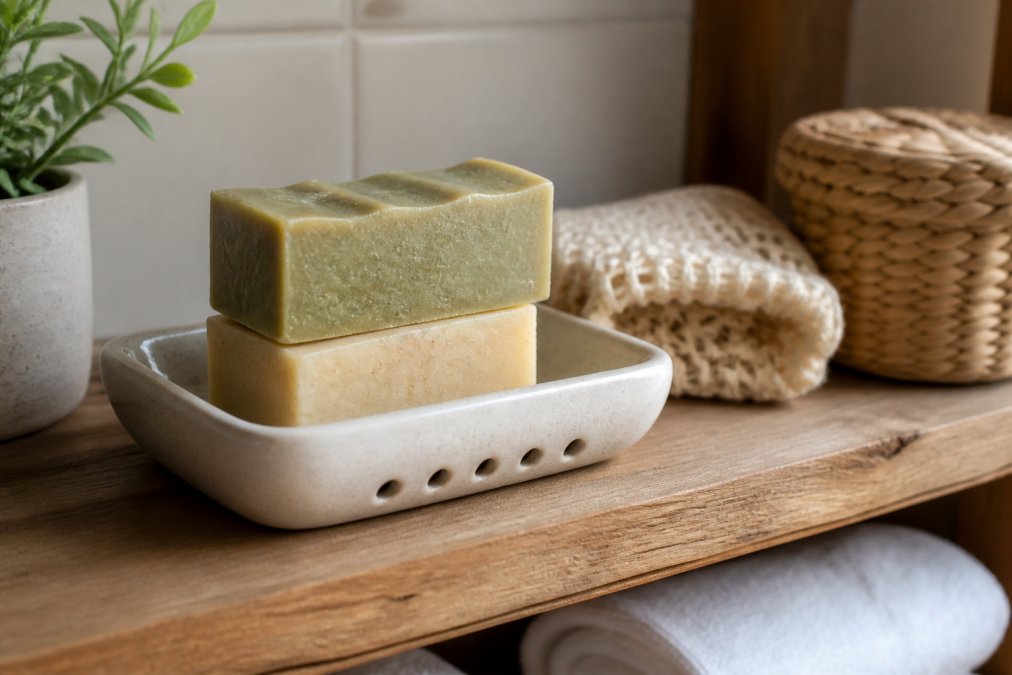
Wrap unused soap. Store backup bars in paper or cloth, not plastic. Plastic traps moisture and speeds oxidation. Paper or cloth lets the bar continue curing slightly while protecting it from dust. Keep wrapped soaps in a drawer or cabinet away from heat and light.
According to research on soap storage from the Craft and Hobby Association, bars stored in cool, dry conditions with good air circulation maintain quality 40% longer than those stored in humid bathrooms.
Signs Your Natural Soap Has Expired
Natural soap doesn't expire like food, but it does degrade. Knowing the signs helps you use soap at its peak and discard it when quality drops.
Rancidity is the main concern. Natural oils oxidize over time, especially unsaturated oils like olive oil. You'll notice a musty, off smell, not the original fragrance. The bar may feel greasy or soft even when dry. Oxidized soap is still safe but performs poorly and may irritate sensitive skin.
Discoloration signals oxidation. Dreaded orange spots or yellowing indicates the oils are breaking down. This happens faster with soaps exposed to light or stored in warm places. Some color fading is normal, but dramatic changes mean the bar is degrading.
Texture changes matter. A bar that was firm becomes mushy or crumbly. Crumbling usually means the bar is too old or was stored improperly. Mushiness suggests water damage or humidity exposure.
Scent fades or changes. Essential oils evaporate over time. If your soap smelled like lavender and now smells faint or off, it's losing potency. The bar is still usable but losing its therapeutic aromatherapy benefits.
Mold growth is a hard stop. Black, green, or pink spots mean mold.
Making Your Natural Soap Bars Last Longer
The Champagne Kisses Shea Butter Soap from Gracie & Co. 1942 is designed to last through proper curing and quality ingredients. At 7 ounces, a single bar typically lasts 4-6 weeks with daily use when stored on a draining soap dish. The rich shea butter formula means the bar softens slightly faster than harder soaps, but this is intentional, it creates the luxurious lather and skin-nourishing benefits customers love. Proper storage makes all the difference in getting maximum value.
Conclusion
Natural soap lasts longer than many commercial bars when you understand what affects longevity. The curing process, oil composition, storage conditions, and daily habits all play crucial roles. A quality handmade bar will outlast cheaper alternatives if you store it properly and use it thoughtfully.
Frequently Asked Questions
How long does natural soap typically last compared to commercial bars?
Natural soap bars typically last longer with regular daily use. The difference comes down to the curing process and ingredient composition. Handmade soaps are cured for 4-6 weeks after production, which hardens the bar and reduces water content. Proper storage on a draining soap dish extends shelf life significantly by preventing excess moisture absorption.
What's the shelf life of natural soap if stored properly?
When stored in a cool, dry place away from direct water exposure, natural soap bars can remain usable for 1-2 years. However, quality gradually declines over time due to oxidation of natural oils and scent dissipation. Store bars in a cool, dark location with good air circulation. Avoid humid bathrooms and sealed containers, which trap moisture and accelerate deterioration.
Why does natural soap seem to melt faster than store-bought soap?
Natural soap melts faster because it contains higher concentrations of glycerin and natural oils, which are water-soluble. The curing process in handmade soaps creates a firmer bar, but the inherent chemistry of natural ingredients makes them more prone to softening when exposed to moisture. Using a soap saver bag or draining soap dish prevents constant water exposure and extends usable life.
Can you use expired natural soap, and what are the signs it's gone bad?
Expired natural soap is generally safe to use but loses effectiveness and appeal. Look for rancidity (sour or musty smell from oxidized oils), discoloration, or the dreaded orange spots that indicate oil breakdown. Texture changes like excessive softness, crumbling, or a sticky surface signal moisture damage or mold. Scent loss alone doesn't mean the soap is unsafe, just less enjoyable. If you notice mold, visible mildew, or a distinctly unpleasant odor beyond normal scent fade, discard the bar. Proper storage prevents most of these issues.