Is Sustainable Skincare Worth the Price? An Honest Look

Last Updated: October 24, 2026
Quick Summary
Sustainable skincare is worth the price when you judge it by cost per use, not shelf price. A well-made bar built on shea butter, coconut milk and kaolin clay lasts when kept dry, so it can cost less per wash than a cheap bar that dissolves fast. Whether it's worth it for you comes down to your skin and what you value.
- Cold-process bars are made by hand in small batches and cured for weeks, which is why they cost more.
- Every bar we sell has shea butter, coconut milk and kaolin clay as its base.
- Divide a bar's price by the days it lasts to compare true cost per use.
- Keep bars on a draining dish so they dry between uses and last far longer.
- A well-made bar cleanses gently, but it won't treat a skin condition, so see a doctor for that.
Table of Contents
- What Makes Skincare Sustainable, and Why It Costs More
- Sustainable Skincare Products: What You're Actually Paying For
- Sustainable Skincare Packaging and the Waste Question
- Affordable Sustainable Skincare: Where the Real Value Shows Up
- Does Sustainable Skincare Work as Well as Conventional?
- Building a Sustainable Skincare Routine That Fits Your Skin
- How to Tell If a Brand's Sustainability Claims Are Real
- Choosing Your First Shea Butter Soap
- Frequently Asked Questions
What Makes Skincare Sustainable, and Why It Costs More
Is sustainable skincare worth the price? Here at Gracie & Co. 1942, we get asked this a lot, and the honest answer is that it depends on what you're comparing.
A bar of mass-market soap can be made in hours by machine, with fillers and synthetic detergents doing the work.
So the price gap is real. If you want the deeper case first, our article on what makes handmade soap worth it covers it well.
Sustainable Skincare Products: What You're Actually Paying For
You're paying for what's inside the bar, and for what isn't. No sulfates. No parabens. No synthetic fillers. Every bar we make starts with three ingredients that do real work.
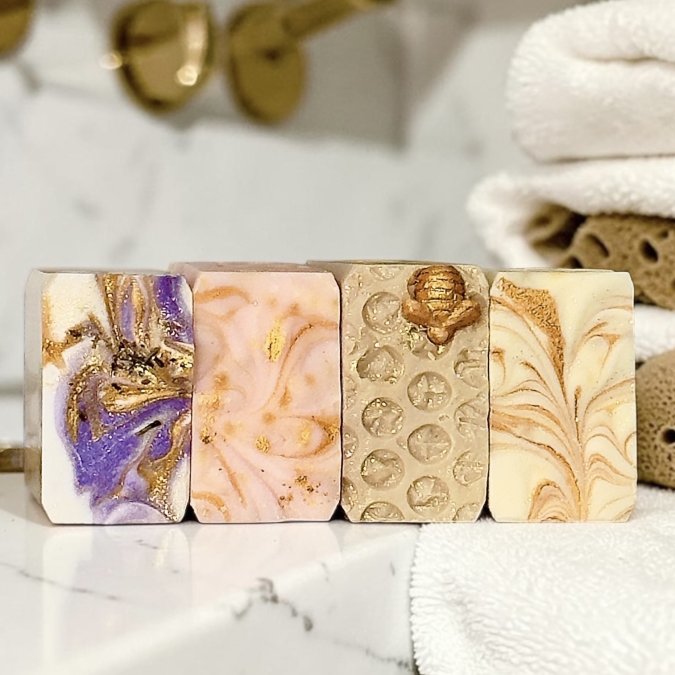
Shea Butter, Coconut Milk and Kaolin Clay
Shea butter is a rich plant butter that helps skin hold on to moisture.
Every soap bar we sell has all three. That's the base, whether you pick a Signature bar or an Everyday bar. Signature soaps are 7 oz bars, hand-piped one at a time. Everyday bars are about 5 oz. Both are sulfate-free, cold process, and cured for weeks.
Facial Soaps With Extra Care Built In
Facial soaps get extra shea butter, coconut milk and sea moss, plus a clay chosen for a specific job. Clarity uses activated charcoal with kaolin and bentonite clays, and it's made for skin that tends to feel oily. French green clay is for normal to oily skin. Rose French pink clay is one of the gentlest, a good fit for sensitive or dry skin. Turmeric and vitamin C rounds out the set with kaolin clay. If you want to see the charcoal bar itself, you can shop the Clarity Charcoal & Sea Moss Facial Soap.

Sustainable Skincare Packaging and the Waste Question
Packaging is where a lot of "eco-friendly" claims get thin. A glass jar with a plastic pump is recyclable in theory, but the pump often isn't.
We keep our packaging simple on purpose. But I want to be honest with you about something most articles skip: less packaging isn't automatically better. Packaging does a job. It keeps a product clean, stable, and safe to use.
Why a Bar Sidesteps the Preservation Problem
Liquid cleansers and creams contain water, and water is where bacteria grow. That's why they need preservatives and why they come in sealed bottles and jars. A cold-process bar is different.
That's not a knock on liquid products. It's just the trade-off. If you want a liquid cleanser, you need a bottle and a preservative system. If you want to skip both, a bar is the simpler path.
The Trade-Offs You Should Know About
- Hygiene. A bar shared by several people in a wet shower stays wet. Keep it on a draining dish and it dries between uses. That's the whole trick.
- Shelf life. Handmade bars last a long time when stored dry and cool. Keep spares out of the shower spray and they'll be fine when you get to them.
- Stability. Handmade bars vary slightly from batch to batch because they're made by hand. That's a real difference from a machine-made bar, and it's part of what you're paying for.
What to Ask About Any Packaging Claim
When a brand talks about its packaging, ask:
- Is the whole package recyclable, or just part of it? A pump, a sprayer, or a mixed-material lid can sink an otherwise recyclable jar.
- Is it refillable, and is the refill actually available?
- Is the packaging necessary at all, or is it there to make the product look bigger?
If a brand can't answer those plainly, treat the claim as marketing until proven otherwise.
The Waste Win Nobody Talks About
The biggest waste win isn't a fancy package. It's using what you buy all the way down to the last sliver. A bar used fully is a bar that never needed a replacement. That's a quieter kind of sustainability than a recyclable label, but it's the one that actually adds up.
Affordable Sustainable Skincare: Where the Real Value Shows Up
Affordable sustainable skincare isn't about the cheapest bar on the shelf. It's about cost per use, and that number depends on things you can actually check before you buy.
A cheap bar that dissolves in two weeks can cost more over a year than a denser bar that lasts two months. The shelf price tells you almost nothing. What matters is how many washes you get for what you spend.
The Four Things That Decide Cost Per Use
When I compare two bars, I look at four things:
- Bar weight. A 7 oz Signature bar is a bigger, denser bar than a typical drugstore bar. More soap by weight means more washes, as long as the bar holds together.
- How fast it dissolves. A bar left sitting in water wastes itself. A bar that drains dry between uses lasts far longer, so the same bar can cost less per wash just because you stored it well.
- What's in it. A bar built on shea butter, coconut milk and kaolin clay is doing real work on your skin. A bar padded with fillers and synthetic detergents may be cheaper up front but gives you less per wash.
A Simple Way to Run the Math Yourself
You don't need a spreadsheet. Try this:
Clarity Charcoal & Sea Moss Facial Soap – 3 oz →
- Note the weight of the bar you're considering.
- Note how many days a bar of that size typically lasts you.
- Divide the shelf price by the number of days.
That daily figure is the number to compare, not the sticker price. A bar that costs a little more but lasts twice as long usually wins. And if you switch from a bottle of body wash to a bar, you're also cutting out the water and packaging that come with liquid products, which is part of the value even though it doesn't show up on a receipt.
Where the Real Savings Hide
The biggest savings aren't in finding the cheapest bar. They're in three habits:
- Buying one good bar instead of three mediocre ones. Fewer products means less waste and less guesswork.
- Using every sliver. Press the last piece onto the next bar, or keep it in a dish by the sink. Soap that gets thrown away is money thrown away.
- Keeping bars dry. A draining soap dish is the single best upgrade you can make. If you want another way to keep a bar dry, read why soap on a rope still makes sense. It costs almost nothing and it stretches every bar you buy.
What We Won't Tell You
We won't pretend a handmade bar is always the cheapest option per wash. It isn't, and anyone who says otherwise is selling you something. What we will say is that a well-made shea butter soap gives you a shorter ingredient list, real oils and butters, and a bar that lasts when you treat it well.
If you want to see how the bars are sized, our Signature and Everyday shea butter soaps page lays it out plainly.
Does Sustainable Skincare Work as Well as Conventional?
Yes, for most everyday cleansing. A well-made cold-process bar cleanses gently and leaves skin feeling comfortable rather than tight. The trade-off is that handmade bars vary slightly from batch to batch, because they're made by hand.
What handmade soap won't do is treat a skin condition. It cleanses. If you have eczema, acne or another diagnosed concern, see a doctor.
Building a Sustainable Skincare Routine That Fits Your Skin
Start with your skin type, not the label. Our guide on how to choose the right handmade soap for your skin type can help you pick. Dry skin does well with a bar rich in shea butter. Oily skin often likes the Clarity charcoal bar.
Keep the routine short: cleanse, moisturize, and use sunscreen during the day. Fewer products means less waste and less guesswork.
How to Tell If a Brand's Sustainability Claims Are Real
Look for specifics, not slogans. A brand that says "eco-friendly" without saying how is telling you nothing. Ask these questions:
- Is the full ingredient list published?
- Does the brand name its packaging materials?
- Are claims like "cruelty-free" or "organic" backed on the product page?
If a brand can't answer those, treat the claim as marketing until proven otherwise.
Choosing Your First Shea Butter Soap
Pick one bar and use it all the way through before you decide. That's the only honest test of whether the price was worth it for your skin. Start with a bar that matches your skin type, keep it dry, and give it a few weeks.
| If your skin is... | Try this shea butter soap | Why |
|---|---|---|
| Oily or blemish-prone | Clarity Charcoal & Sea Moss Facial Soap | Activated charcoal with kaolin and bentonite clays |
| Normal to oily | French Green Clay & Sea Moss Facial Soap | French green clay with sweet almond oil |
| Sensitive or dry | Rose Clay & Sea Moss Facial Soap | Gentle French pink clay with rose extract |
| Dull or uneven-looking | Turmeric & Vitamin C Sea Moss Facial Soap | Turmeric and vitamin C with kaolin clay |
| Body, everyday | Signature or Everyday shea butter soap | Shea butter, coconut milk and kaolin clay |
Our Tip
Buy one bar first. Use it fully, then decide. That's the fairest way to judge whether sustainable skincare is worth the price for you.
If you're ready to try one, start with our Clarity Charcoal & Sea Moss Facial Soap or browse the full PURE Natural Soap Collection.
Frequently Asked Questions
Are sustainable products more expensive?
Usually, yes, upfront. Small-batch cold-process soap takes weeks to cure, uses real shea butter and coconut milk, and is made by hand rather than by the thousands on a machine. That work is in the price. But cost per use tells a fairer story. A 7 oz Signature bar and a 5 oz Everyday bar both last a good while when kept dry between washes, so the gap between a $20 bar and a drugstore bar narrows when you divide by weeks of use. Judge it per wash, not per bar.
Does sustainable skincare work as well as conventional skincare?
For cleaning and moisturizing, a well-made sustainable skincare product can do the job. Our shea butter soap is sulfate-free, so it cleanses without stripping your skin's natural oils, and the shea butter helps skin hold on to moisture. Coconut milk gives a rich, creamy lather and kaolin clay gives a silky feel while helping lift away dirt and oil. What soap will not do is cure a skin condition. If you have eczema, acne or another diagnosis, see a doctor.
How can I tell whether eco-friendly skincare is worth the price?
Ask three things. First, can you see the full ingredient list? Ours lists everything, including the clays and sea moss. Second, is the bar a size that lasts? Our Everyday bars are about 5 oz and Signature bars are 7 oz. Third, does the maker explain the packaging honestly? A bar wrapped in paper is simple, but a bar that melts in two weeks is not a saving. Compare cost per use and ingredient transparency, not the label.
Can refillable or low-waste skincare save money over time?
It can, mostly by cutting what you throw away and what you over-buy. A bar of shea butter soap replaces a bottle of body wash, and there is no plastic bottle to toss. The savings come from buying less and using it all. Keep your bar on a draining soap dish so it dries between uses, and it will last noticeably longer. That is the simplest low-waste habit I know, and it costs nothing.
Is natural skincare always better for your skin?
No, and I would not claim that. Natural is not a guarantee of gentle. What matters is the formula and your own skin. Our soaps are sulfate-free and made without parabens, and our fragrance oils are phthalate-free, which many people look for. But if your skin is sensitive, patch test anything new, including ours. Start with a gentle bar like our Rose Clay & Sea Moss Facial Soap, which uses one of the gentlest clays, and give it a week before you judge.
A little about us: I'm Gracie, a third-generation soap maker. My grandmother started our family's soap making, and I'm proud to carry it on. We're a small, faith-centered family business in Waddell, Arizona, and we make everything by hand in small batches.