7 Ways to Reduce Skincare Waste at Home

Last Updated: October 23, 2026
Quick Summary
You can reduce skincare waste at home by buying only what you'll use, using products up before they expire, and swapping bottles for solid bars. Empty, clean and separate packaging before recycling it, and repurpose containers your local program won't take.
- Finish one product before opening another and buy the smaller size when testing something new.
- Move the oldest open products to the front of the shelf and use them first.
- Trade liquid body wash for a bar of shea butter soap to remove the plastic bottle.
- Rinse bottles and jars and remove pumps, caps and droppers before recycling.
- Start with one swap, usually body wash or shampoo, when it runs out.
Table of Contents
- 1. Buy Only What You Need
- 2. How to Use Up Skincare Products Before They Expire
- 3. Make Plastic-Free Skincare Swaps
- 4. How to Recycle Beauty Products and Packaging
- 5. Check What Your Local Recycling Program Accepts
- 6. Repurpose Containers You Can't Recycle
- 7. Build a Low-Waste Skincare Routine
- Our Tip
- Frequently Asked Questions
1. Buy Only What You Need
The simplest way to cut skincare waste is to stop buying more than you'll use. That sounds obvious, but most of us have a drawer full of half-empty bottles we forgot about.
I'm Gracie, and at Gracie & Co. 1942 we make every bar by hand in small batches. It pains me to think of anything handmade going to waste. So here's my honest advice: before you buy another serum or cream, empty the drawer. Line everything up. You'll likely find three moisturizers doing the same job.
A few habits that help:
- Finish one product before opening another
- Buy the smaller size if you're testing something new
- Skip the "stock up" sale unless you know you'll use it all
- Ask what a product actually does before it earns shelf space
2. How to Use Up Skincare Products Before They Expire
Most skincare products have a shelf life, and once opened, the clock runs faster. The fix is to use what you have, in order, before it turns.
Start with the oldest open product. Check the label for a small open-jar symbol, which tells you how many months it stays good after opening. Anything that smells off, looks separated or changed color should go. Don't risk your skin on a product that's past its time.
A simple way to use things up:
- Move the oldest items to the front of the shelf
- Use the same moisturizer on your face and your dry hands
- Turn an almost-empty lotion into a foot treatment at night
- Mix a little exfoliant into body wash to finish the jar
Handmade soap is a little different. A well-cured bar actually gets better with time and lasts longer when it can dry out between uses. Why Handcrafted Soap Lasts Longer: Curing & Care explains how to store and care for it.
3. Make Plastic-Free Skincare Swaps
The biggest source of beauty waste is single-use plastic packaging. Swapping a bottle for a solid bar removes that packaging entirely, and it's the change I'd make first.
Solid formats are simple: no bottle, no pump, no plastic. A bar of shea butter soap, a shampoo bar, a lotion bar, all do the job and leave nothing behind but a wrapper you can often recycle or compost.
Here's where to start:
- Trade liquid body wash for a bar of shea butter soap
- Swap bottled shampoo for a solid shampoo bar
- Replace bottled lotion with a solid lotion bar for dry spots
- Try a solid conditioner bar instead of a plastic bottle
Every soap bar we make has shea butter, coconut milk and kaolin clay. Shea butter helps skin hold on to moisture. Coconut milk makes a rich, creamy lather. Kaolin clay is a gentle clay that gives a silky feel and helps lift away dirt and oil. That's a lot of care in one small bar with no bottle to toss.
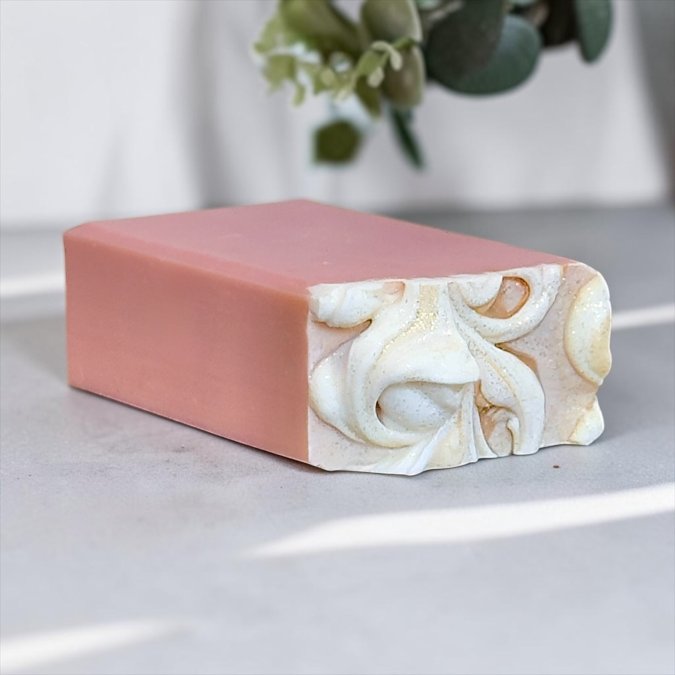
If you're ready to browse, you can shop handcrafted bath and body products and see the solid options for yourself.
Here are the solid swaps I'd start with, and what each one replaces.
| Swap to | Replaces | Key difference |
|---|---|---|
| Bar of shea butter soap | Liquid body wash | No bottle, pump or plastic |
| Solid shampoo bar | Bottled shampoo | Leaves only a recyclable or compostable wrapper |
| Solid lotion bar | Bottled lotion | Good for dry spots, no bottle |
| Solid conditioner bar | Plastic bottle of conditioner | Removes the packaging entirely |
4. How to Recycle Beauty Products and Packaging
Knowing how to recycle beauty products starts with one rule: empty, clean and separate. Most packaging can be recycled, but only if it's rinsed and sorted correctly.
Here's how I'd handle it:
- Scrape out as much product as you can and use it up
- Rinse bottles and jars so no residue is left
- Remove pumps, caps and droppers, which often can't be recycled
- Check the number on the bottom of plastic containers
- Keep paper boxes and cartons separate for paper recycling
Glass jars and bottles are usually the easiest to recycle. Plastic tubs and tubes depend on your local program. When in doubt, check before you toss it in the bin. A quick look at the EPA's guide to reducing and reusing waste can help you understand what happens to packaging after it leaves your home.
5. Check What Your Local Recycling Program Accepts
Recycling rules are local, and they change from one town to the next. What your neighbor can recycle may not be accepted where you live.
NUTRIENT FOCUS Solid Shampoo Bar - 6 Scents + Travel Tin →
Look up your city or county recycling program online. Most list exactly which plastics, glass and paper they take, plus what to leave out. Pay attention to the small stuff, because caps, pumps and tubes are often the items that get rejected.
A few things to check:
- Which plastic numbers your program accepts
- Whether glass is collected curbside or at a drop-off
- If tubes and pumps are accepted at all
- Where to take hard-to-recycle items
If your program won't take something, don't force it. That's where the next step comes in.
6. Repurpose Containers You Can't Recycle
Some packaging just can't go in the bin. Instead of tossing it, give it a second job around the house.
Glass jars are the easiest to reuse. Wash them out and use them for:
- Storing cotton swabs or hair ties
- Holding homemade sugar scrub
- Keeping small items organized in a drawer
- A little vase for flowers
Tubes and pumps are harder. A cleaned-out pump bottle can hold homemade cleaner or be refilled at a bulk store if one is near you. If it truly can't be reused or recycled, that's a sign to choose a different format next time.
7. Build a Low-Waste Skincare Routine
A low-waste skincare routine is one you can keep up, not a perfect system you abandon in a week. Skincare Trends We Actually Like (and a Few We Don't) covers which low-waste formats are worth adopting. Small, steady changes add up more than a total overhaul.
Here's what a simple routine looks like:
- Cleanse with a solid bar instead of a bottle
- Moisturize with a lotion bar or a bar with shea butter
- Exfoliate with a scrub in a reusable jar
- Store everything so it dries between uses
- Buy a replacement only when something runs out
That's it. No complicated steps, no drawer full of products.
Our Tip
My best advice is to start with one swap, not seven. Pick the product you use fastest, usually body wash or shampoo, and replace it with a solid bar when it runs out. Then let the next one follow. That's how a low-waste routine becomes a habit instead of a project.
We make our bars by hand in small batches, sulfate-free and cured for weeks, with shea butter, coconut milk and kaolin clay in every bar. If you'd like to start with a solid swap, our handcrafted signature soap is a good place to begin. And if you have questions, just ask. We're happy to help.
Reducing skincare waste at home doesn't require a perfect plan. It takes a few honest swaps and the patience to use what you already own. At Gracie & Co. 1942, we make small-batch shea butter soap and solid bars that skip the plastic bottle, with shea butter, coconut milk and kaolin clay in every bar. Start with one swap, and let the rest follow. Shop our handcrafted soaps and take the first step.
A little about us: I'm Gracie, a third-generation soap maker. My grandmother started our family's soap making, and I'm proud to carry it on. We're a small, faith-centered family business in Waddell, Arizona, and we make everything by hand in small batches.
Frequently Asked Questions
How can I reduce skincare waste at home?
Start by buying only what you need and using each product fully before replacing it. Swap bottled cleansers for bar formats like shea butter soap and shampoo bars, which cut plastic packaging. Rinse and sort empty containers for recycling, and repurpose jars you can't recycle. Even small changes, done consistently, add up to less skincare waste over a year.
Can skincare packaging be recycled?
Some can, some can't. Rigid plastic bottles and glass jars are often accepted curbside, but pumps, droppers, and mixed-material tubes usually are not. Check your local program's list before tossing anything in the bin. Rinse containers first so residue doesn't contaminate the batch. If your area doesn't take a material, repurpose the container or look for a drop-off program instead.
Are bar soaps a lower-waste alternative to bottled cleansers?
Yes, in most cases. A bar of shea butter soap typically comes in paper or no packaging at all, while a bottled cleanser uses plastic that often isn't recycled. Bars also last a long time when kept dry on a draining dish. Our bars are cold process, sulfate-free, and made with shea butter, coconut milk, and kaolin clay, so you get a creamy lather without the bottle.
How do I use up skincare products before they expire?
Use the oldest products first and keep them in a cool, dark spot away from humidity. Follow the label's storage instructions and stop using anything that smells off or has changed texture. Multi-purpose products help too: a lotion bar can go on hands, elbows, and feet. If a product is past its date, don't push it on your skin just to finish it.
What should I do with empty skincare containers?
Scrape out what's left, rinse with warm water, and let the container dry fully. Then check your local recycling rules for that material. Glass jars and rigid plastic bottles are the most likely to be accepted. Pumps and droppers usually need to be separated or thrown out. If a container isn't recyclable, repurpose it for travel, storage, or small household items.